
Highly recommended
Nudge
Improving Decisions About Health, Wealth, and Happiness
Small changes in how choices are presented can help people make better decisions, without restricting freedom.
- Published 2008
- Moderate
- Science and research
- 2 min analysis
As an Amazon Associate I earn from qualifying purchases.
Introduction
Richard H. Thaler, an economist who later received the Nobel Memorial Prize in Economic Sciences in 2017, and Cass R. Sunstein, a legal scholar, wrote Nudge in 2008. It introduced the idea of 'choice architecture': how the design of choices influences decisions.
They propose 'libertarian paternalism', nudging people toward better choices while keeping them free to choose otherwise. A revised 'Final Edition' was published in 2021.
Who should read this book?
Readers interested in behavioural economics, policy makers, managers and anyone who designs choices for others.
Helps with: Get my money right, Think and decide more clearly
The central message
How choices are presented, such as defaults and ordering, strongly affects decisions. Thoughtful design can help people choose better while preserving freedom.
Key ideas and concepts
Choice architecture
Every choice is presented in some way, and design shapes behaviour.
Defaults
People tend to stick with default options, so automatic enrolment in savings plans can greatly increase participation.
Humans vs Econs
Real people aren't the perfectly rational 'Econs' of economic theory.
Libertarian paternalism
Nudge toward better outcomes while preserving freedom of choice.
Feedback and mapping
Good design gives feedback and helps people understand options.
Deeper analysis
Nudge is one of the most influential books in behavioural economics, and its ideas have shaped policy in many countries. The power of defaults, such as automatic enrolment in retirement savings, is one of the most practical insights for personal finance and organizations.
Critics argue nudges can be manipulative or used for commercial ends, and that some nudge effects are smaller than early studies suggested. The book is long and policy-heavy in places. Still, it's essential for understanding how small design choices shape behaviour, and readers can apply it to their own habits.
Practical applications
- Set good defaults in your own life, like automatic savings.
- Rearrange your kitchen so healthy food is easiest to reach.
- Design simpler choices for your team or family.
- Notice when companies use defaults to steer you.
- Make feedback visible, like tracking spending.
Your 7-day action plan
- Day 1
List the defaults in your finances.
- Day 2
Automate one good financial behaviour.
- Day 3
Redesign your environment for a habit.
- Day 4
Spot a nudge used on you.
- Day 5
Simplify a choice for others.
- Day 6
Add visible feedback to a goal.
- Day 7
Reflect on choice design.
Outcomes to expect
What readers who apply this book can realistically take away from it:
- Understanding of choice architecture
- Better personal defaults
- Skills to design choices
- Awareness of being nudged
Strengths and limitations
Strengths
- Highly influential ideas
- Practical insight on defaults
- Applies to personal life and policy
- Nobel-winning author
Limitations
- Nudges can be manipulative
- Some effects smaller than first thought
- Policy-heavy in places
Reflection questions
- Which defaults shape your life?
- How could you nudge yourself?
- Where are you being nudged?
- What choices do you design for others?
Related books
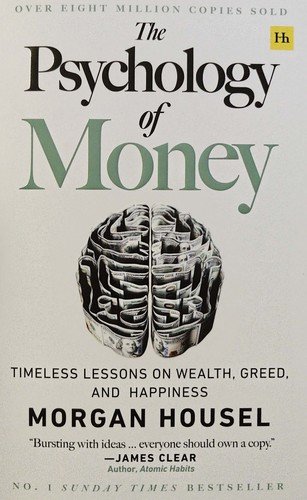
The Psychology of Money
Morgan Housel
Doing well with money has less to do with intelligence and more to do with behaviour. Short, memorable…
About the authors
Explore the book
Read reviews, see formats (print, Kindle, audiobook) and check the current price.
See it on AmazonAs an Amazon Associate I earn from qualifying purchases.
Book details (title, author, year) are factual. Everything under the headings above is MindsetProdigy's own editorial analysis and interpretation, written to help you decide whether to read the book and how to apply it. It is not a substitute for reading the book itself. Last updated September 30, 2026.