

Highly recommended
Supercommunicators
How to Unlock the Secret Language of Connection
Every conversation is one of three kinds: practical, emotional or social. Connect by matching the right one.
- Published 2024
- Easy read
- Stories and memoir
- 2 min analysis
As an Amazon Associate I earn from qualifying purchases.
Introduction
Charles Duhigg, author of The Power of Habit, explores what makes some people exceptional communicators. Supercommunicators, published in 2024, draws on research and stories, from a CIA recruiter to the TV show The Big Bang Theory, to show how people connect.
Duhigg argues every conversation contains three types: practical, emotional and social.
Who should read this book?
Anyone wanting to connect more deeply, from leaders and salespeople to parents and partners.
Helps with: Communicate and persuade, Improve my relationships
The central message
Great communicators notice what kind of conversation is happening, match it, and ask deep questions that build connection.
Key ideas and concepts
Three kinds of conversations
Duhigg describes practical 'What's this really about?' conversations, emotional 'How do we feel?' conversations and social 'Who are we?' conversations.
The matching principle
Connection happens when we recognize which kind of conversation the other person is having and match it.
Deep questions
Questions about values, beliefs and experiences, such as 'What do you love about your job?', create closeness.
Looping for understanding
Ask a question, summarize what you heard, and ask whether you got it right.
Identity in conversations
Our social identities shape how we hear each other, especially on divisive topics.
Deeper analysis
Supercommunicators is engaging and practical, combining Duhigg's trademark storytelling with research on how people connect. His framework of three kinds of conversations, practical, emotional and social, and the matching principle help explain why some conversations click and others fall flat. Techniques like 'looping for understanding' and asking deep questions are simple and effective.
Like Duhigg's earlier books, it's story-heavy, and some readers want more practical exercises. Some ideas overlap with existing books on listening and conflict. Still, it's a helpful, modern guide to better conversations.
Practical applications
- Identify which conversation type is happening.
- Ask one deep question.
- Loop for understanding.
- Match someone's emotional tone.
- Notice identity in conversations.
Your 7-day action plan
- Day 1
Learn the three kinds of conversations.
- Day 2
Notice which kind each of your conversations is today.
- Day 3
Ask one deep question about someone's values or experiences.
- Day 4
Practise looping: ask, repeat back, check you understood.
- Day 5
Match someone's emotional tone before offering solutions.
- Day 6
Notice how identity shapes a conversation on a sensitive topic.
- Day 7
Reflect on which conversation felt most connected and why.
Outcomes to expect
What readers who apply this book can realistically take away from it:
- Deeper connections in conversation
- Better listening skills
- Awareness of what kind of conversation is happening
- Skill in asking deep questions
Strengths and limitations
Strengths
- Engaging stories and research
- Useful framework of three conversation types
- Simple, practical looping technique
- Relevant to work and personal life
Limitations
- Story-heavy
- Fewer practical exercises than some readers want
- Overlaps with other communication books
Reflection questions
- What type of conversation are you having?
- What deep question could you ask?
- How do you show understanding?
- How does identity shape your conversations?
Related books
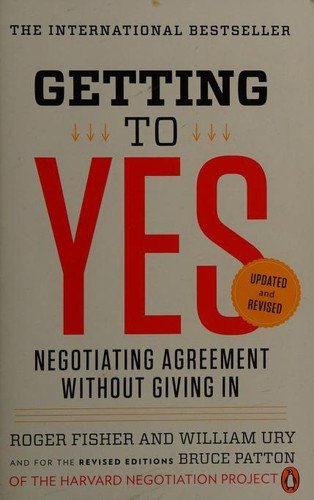
Getting to Yes
Roger Fisher, William Ury and Bruce Patton
Separate people from the problem and focus on interests, not positions. The classic of principled negotiation.

About the author
Explore the book
Read reviews, see formats (print, Kindle, audiobook) and check the current price.
See it on AmazonAs an Amazon Associate I earn from qualifying purchases.
Book details (title, author, year) are factual. Everything under the headings above is MindsetProdigy's own editorial analysis and interpretation, written to help you decide whether to read the book and how to apply it. It is not a substitute for reading the book itself. Last updated September 28, 2026.