
Essential read
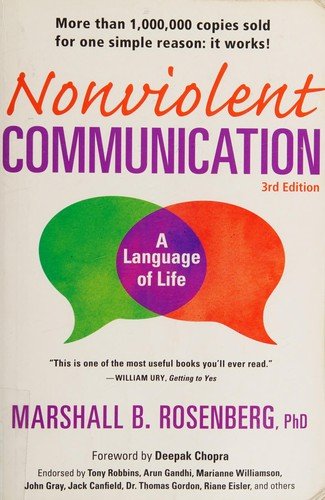
Nonviolent Communication
A Language of Life
Say what you need without blame, and hear others without defensiveness.
- Published 1999
- Moderate
- Practical guidance
- 2 min analysis
As an Amazon Associate I earn from qualifying purchases.
Introduction
Marshall B. Rosenberg was a psychologist who developed Nonviolent Communication (NVC) and taught it around the world, including in conflict zones. His book, first published in 1999, presents a four-part process for communicating with honesty and empathy.
Rosenberg believed that behind every action is an attempt to meet universal human needs, and that conflict arises when we express needs as judgements or demands.
Who should read this book?
Anyone wanting to reduce conflict and connect more deeply, including couples, parents, teachers, managers and mediators.
Helps with: Communicate and persuade, Improve my relationships
The central message
Communicate through observations, feelings, needs and requests, and listen empathically for others' feelings and needs. This creates connection instead of conflict.
Key ideas and concepts
Observations without evaluation
Describe what you actually saw or heard, like 'You arrived at 9:20', rather than a judgement like 'You're always late'.
Feelings
Express how you feel, and distinguish real feelings from thoughts disguised as feelings, such as 'I feel ignored'.
Needs
Identify the universal human needs behind your feelings, such as respect, rest or connection.
Requests
Make clear, specific, doable requests rather than demands, and be open to a 'no'.
Empathic listening
Listen for the feelings and needs behind others' words, even when they are expressed as criticism.
Deeper analysis
Nonviolent Communication offers a powerful, practical framework that has transformed conversations for many people, from couples and parents to mediators and teachers. Its distinction between observations and evaluations is especially useful, and its focus on needs helps people find common ground in conflict.
The structured language can feel formulaic or unnatural at first, and some readers find Rosenberg's view of human nature idealistic. NVC requires practice to use well; reading alone isn't enough, which is why many people join practice groups. Still, its core ideas can change how you speak and listen.
Practical applications
- Describe a situation without judgement.
- Name a feeling and need.
- Make a clear request.
- Listen for needs behind criticism.
- Practise NVC in a low-stakes conversation.
Your 7-day action plan
- Day 1
Practise describing three situations as pure observations, without judgement.
- Day 2
Name your feelings at three points in the day.
- Day 3
Identify the needs behind those feelings.
- Day 4
Make one clear, doable request of someone.
- Day 5
Listen to someone and guess the feelings and needs behind their words.
- Day 6
Use all four steps in a real disagreement.
- Day 7
Reflect on what changed in your conversations.
Outcomes to expect
What readers who apply this book can realistically take away from it:
- Fewer escalating conflicts
- Deeper empathy
- Clearer expression of needs
- Stronger connection in relationships
Strengths and limitations
Strengths
- Powerful, practical communication framework
- Helps separate observations from judgements
- Widely used in mediation and education
- Compassionate approach to conflict
Limitations
- Structured language can feel formulaic at first
- Idealistic view for some readers
- Requires practice beyond reading
Reflection questions
- What judgements do you make?
- What do you feel and need?
- What would you request?
- What needs lie behind others' criticism?
Related books
Crucial Conversations
Kerry Patterson, Joseph Grenny, Ron McMillan and Al Switzler
Tools for high-stakes talks.
How to Win Friends and Influence People
Dale Carnegie
The classic guide to getting along with people, still useful nearly a century later.
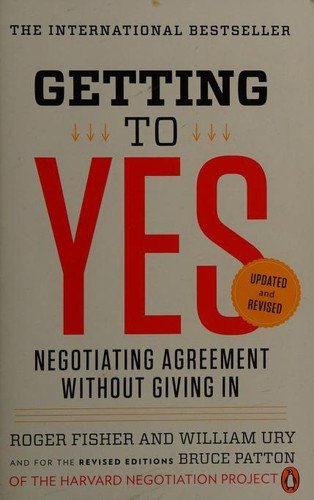
Getting to Yes
Roger Fisher, William Ury and Bruce Patton
Separate people from the problem and focus on interests, not positions. The classic of principled negotiation.


About the author
Explore the book
Read reviews, see formats (print, Kindle, audiobook) and check the current price.
See it on AmazonAs an Amazon Associate I earn from qualifying purchases.
Book details (title, author, year) are factual. Everything under the headings above is MindsetProdigy's own editorial analysis and interpretation, written to help you decide whether to read the book and how to apply it. It is not a substitute for reading the book itself. Last updated September 28, 2026.