
Essential read
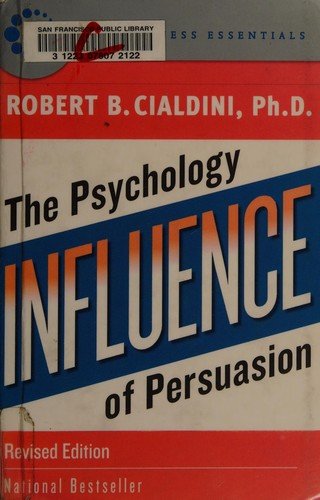
Influence
The Psychology of Persuasion
Why people say yes, and how to recognize when you're being persuaded.
- Published 1984
- Moderate
- Science and research
- 2 min analysis
As an Amazon Associate I earn from qualifying purchases.
Introduction
Robert Cialdini, a psychologist at Arizona State University, spent years studying persuasion, including by working undercover in sales and fundraising. Influence: The Psychology of Persuasion, first published in 1984 and expanded in 2021, identifies the principles that make people say yes.
The book helps readers both use persuasion ethically and defend against manipulation.
Who should read this book?
Marketers, salespeople, leaders, negotiators and consumers who want to understand and resist persuasion tactics.
Helps with: Communicate and persuade, Think and decide more clearly
The central message
People rely on mental shortcuts when deciding. Principles like reciprocity, commitment, social proof, liking, authority, scarcity and unity can trigger automatic compliance.
Key ideas and concepts
Reciprocity
We feel obliged to return favours, even unrequested ones, which is why free samples work.
Commitment and consistency
Once we commit to something, especially publicly or in writing, we tend to act consistently with it.
Social proof
We look to what others are doing, especially similar people and in uncertain situations.
Liking and authority
We say yes more often to people we like and to those who appear to be experts.
Scarcity and unity
Things seem more valuable when rare, and we're influenced by people we see as part of our group.
Deeper analysis
Influence is a classic for good reason. Cialdini's principles are well supported by research and explained through memorable examples, many from his undercover work in sales and fundraising. The book is valuable both for persuading ethically and for recognizing when you're being manipulated by marketers, salespeople or scammers.
Some readers worry it teaches manipulation, though Cialdini emphasizes ethical use and self-defence. A few studies he cited, especially from social psychology, have faced replication questions, though the core principles remain well supported. The expanded 2021 edition is long. Still, it's essential reading for understanding persuasion.
Practical applications
- Notice reciprocity tactics in marketing.
- Use social proof ethically in your work.
- Make commitments public to follow through.
- Pause before buying under scarcity pressure.
- Build genuine liking through common ground.
Your 7-day action plan
- Day 1
Learn the seven principles.
- Day 2
Spot them in ads.
- Day 3
Reflect on a time you were persuaded.
- Day 4
Use one principle ethically.
- Day 5
Defend against a scarcity tactic.
- Day 6
Make a public commitment.
- Day 7
Reflect.
Outcomes to expect
What readers who apply this book can realistically take away from it:
- Understanding of how persuasion works
- Ability to spot and resist manipulation
- Ethical influence skills
- Better consumer decisions
Strengths and limitations
Strengths
- Research-based classic
- Memorable real-world examples
- Useful for persuasion and self-defence
- Widely respected and influential
Limitations
- Can be used manipulatively
- Some cited studies have been questioned
- Expanded edition is long
Reflection questions
- When were you persuaded against your interest?
- Which principle affects you most?
- How could you persuade ethically?
- How will you defend against manipulation?
Related books
How to Win Friends and Influence People
Dale Carnegie
The classic guide to getting along with people, still useful nearly a century later.
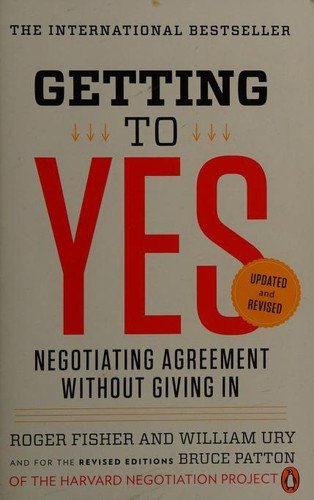
Getting to Yes
Roger Fisher, William Ury and Bruce Patton
Separate people from the problem and focus on interests, not positions. The classic of principled negotiation.


About the author
Explore the book
Read reviews, see formats (print, Kindle, audiobook) and check the current price.
See it on AmazonAs an Amazon Associate I earn from qualifying purchases.
Book details (title, author, year) are factual. Everything under the headings above is MindsetProdigy's own editorial analysis and interpretation, written to help you decide whether to read the book and how to apply it. It is not a substitute for reading the book itself. Last updated September 28, 2026.