

Highly recommended
Think Again
The Power of Knowing What You Don't Know
The ability to rethink and unlearn is a superpower. How to question your own opinions and open other minds.
- Published 2021
- Moderate
- Science and research
- 2 min analysis
As an Amazon Associate I earn from qualifying purchases.
Introduction
Organizational psychologist Adam Grant argues that in a fast-changing world, the ability to rethink and unlearn may matter more than intelligence. Yet we often cling to old views.
Think Again explores how to question our own opinions, open others' minds and build cultures of learning.
Who should read this book?
Curious readers, leaders, teachers, parents and anyone who wants to make better decisions or have more productive disagreements.
Helps with: Communicate and persuade, Think and decide more clearly
The central message
Think like a scientist: treat opinions as hypotheses, seek evidence, and be willing to change your mind.
Key ideas and concepts
Preacher, prosecutor, politician
We often defend beliefs (preacher), attack others (prosecutor) or seek approval (politician) instead of testing ideas (scientist).
Confident humility
Be confident in your ability to learn while humble about current knowledge.
The joy of being wrong
Discovering errors means you've learned something.
Motivational interviewing
Ask questions and listen to help others find their own reasons for change.
Learning cultures
Teams improve when people feel safe to question and admit mistakes.
Deeper analysis
Think Again is engaging and timely. Grant combines research with vivid stories, from firefighters to vaccine conversations, to show why rethinking matters and how it can be learned. The 'think like a scientist' frame is memorable and useful both for personal decisions and for disagreements, and the chapters on motivational interviewing offer practical ways to open other people's minds without arguing.
Some readers find the book light on step-by-step methods and heavy on anecdotes. It may also understate how hard it is to change beliefs that are tied to identity, family or community, where changing your mind can carry real social costs. Still, it's one of the most accessible guides to intellectual humility, and its lessons are especially relevant in polarized times.
Practical applications
- Write down a belief you hold strongly and look for counterevidence.
- In a disagreement, ask questions instead of arguing.
- Say 'I could be wrong' more often.
- Review a past decision you'd make differently now.
- Encourage your team to challenge ideas.
Your 7-day action plan
- Day 1
Identify a belief you've never questioned.
- Day 2
Find evidence against it.
- Day 3
Ask someone with a different view to explain theirs.
- Day 4
Practise motivational interviewing questions.
- Day 5
Admit one mistake.
- Day 6
Encourage open challenge in a meeting.
- Day 7
Reflect on what you rethought.
Outcomes to expect
What readers who apply this book can realistically take away from it:
- Greater intellectual humility and curiosity
- Better conversations with people who disagree
- More willingness to update decisions
- Practical skills for helping others reconsider
Strengths and limitations
Strengths
- Engaging and well researched
- The scientist mindset is a memorable, practical frame
- Useful tools for productive disagreements
- Relevant to work, relationships and public debate
Limitations
- Relies heavily on anecdotes
- Fewer step-by-step methods than some readers want
- Understates the social cost of changing identity-linked beliefs
Reflection questions
- When did you last change your mind?
- Which beliefs are part of your identity?
- How do you react when challenged?
- How could you be more of a scientist?
Related books
Mindset
Carol S. Dweck
Believing you can grow is the first step to actually growing. The landmark book on fixed versus growth…
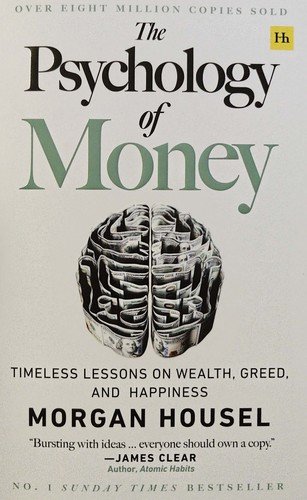
The Psychology of Money
Morgan Housel
Doing well with money has less to do with intelligence and more to do with behaviour. Short, memorable…


About the author
Explore the book
Read reviews, see formats (print, Kindle, audiobook) and check the current price.
See it on AmazonAs an Amazon Associate I earn from qualifying purchases.
Book details (title, author, year) are factual. Everything under the headings above is MindsetProdigy's own editorial analysis and interpretation, written to help you decide whether to read the book and how to apply it. It is not a substitute for reading the book itself. Last updated September 27, 2026.