

Essential read
Mindset
The New Psychology of Success
Believing you can grow is the first step to actually growing. The landmark book on fixed versus growth mindsets.
- Published 2006
- Easy read
- Science and research
- 2 min analysis
As an Amazon Associate I earn from qualifying purchases.
Introduction
Stanford psychologist Carol Dweck spent decades studying why some people thrive on challenges while others avoid them. Her answer is the difference between a fixed mindset, which sees ability as set in stone, and a growth mindset, which sees it as something you build through effort, good strategies and help from others.
The book shows how this one belief shapes behaviour in school, sport, business, parenting and relationships, and how people can begin moving toward growth.
Who should read this book?
Anyone who avoids challenges for fear of looking incapable, plus parents, teachers, coaches and managers who want to encourage resilience in others.
Helps with: Bounce back from setbacks, Build confidence
The central message
People who believe their abilities can be developed approach challenges, effort and failure very differently from those who believe ability is fixed, and that belief can change.
Key ideas and concepts
Fixed versus growth
A fixed mindset sees talent as innate and failure as proof of limits; a growth mindset sees both as part of learning.
Effort is the path
In a growth mindset, effort is what makes you capable, not a sign you lack talent.
Failure as information
Setbacks become feedback rather than a verdict on who you are.
Praise the process
Praising intelligence can make people avoid challenges; praising strategy and effort encourages persistence.
Mindsets are mixed
Everyone has fixed-mindset triggers; the goal is to notice them, not be perfect.
Deeper analysis
Mindset introduced one of the most influential ideas in modern psychology: people who believe abilities can be developed tend to embrace challenges, persist and learn from failure, while those who believe abilities are fixed avoid risk and feel threatened by setbacks. Dweck applies the idea to parenting, teaching, sport, business and relationships, and her advice to praise effort and strategy rather than talent has changed classrooms worldwide.
The book is repetitive, and popular interpretations have often oversimplified it into 'just believe in yourself'. Large studies of growth mindset interventions in schools have found effects that are real but smaller than early enthusiasm suggested, and Dweck has warned against 'false growth mindset'. Read carefully, it remains a valuable lens for learning and resilience.
Practical applications
- Add the word yet: I can't do this yet.
- Praise others for strategies and persistence, not for being smart.
- When you fail, ask what you can learn and what you'd try differently.
- Notice what triggers your fixed mindset, such as criticism or someone better than you.
Your 7-day action plan
- Day 1
Write down an ability you believe you simply don't have.
- Day 2
Find evidence of people who developed that ability.
- Day 3
Take one small step to practise it.
- Day 4
Replace one fixed-mindset thought with a growth reply.
- Day 5
Praise someone's effort or strategy.
- Day 6
Seek feedback on something you've done.
- Day 7
Reflect on a past failure and what it taught you.
Outcomes to expect
What readers who apply this book can realistically take away from it:
- A healthier response to failure
- Greater willingness to take on challenges
- Better ways to praise children and colleagues
- Belief that skills can grow
Strengths and limitations
Strengths
- Simple, powerful and influential idea
- Useful for parents, teachers and managers
- Helps reframe failure as learning
- Clear, accessible writing
Limitations
- Repetitive
- Often oversimplified in popular use
- Intervention effects smaller than early claims
Reflection questions
- Where do you hold a fixed mindset about yourself?
- How do you react when someone outperforms you?
- What would you attempt if you believed you could learn it?
Related books
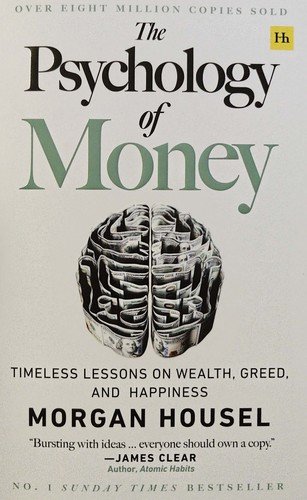
The Psychology of Money
Morgan Housel
Doing well with money has less to do with intelligence and more to do with behaviour. Short, memorable…


Compare: Mindset vs. Grit
About the author
Explore the book
Read reviews, see formats (print, Kindle, audiobook) and check the current price.
See it on AmazonAs an Amazon Associate I earn from qualifying purchases.
Book details (title, author, year) are factual. Everything under the headings above is MindsetProdigy's own editorial analysis and interpretation, written to help you decide whether to read the book and how to apply it. It is not a substitute for reading the book itself. Last updated September 27, 2026.