
Recommended
The Infinite Game
Business isn't a game you win; it's one you keep playing. Lead with a long-term, infinite mindset.
- Published 2019
- Easy read
- Stories and memoir
- 1 min analysis
As an Amazon Associate I earn from qualifying purchases.
Introduction
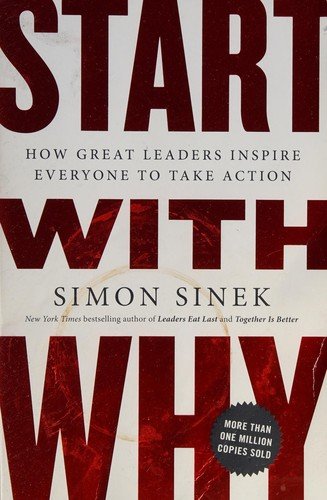
Simon Sinek, author of Start With Why, draws on philosopher James Carse's idea of finite and infinite games in The Infinite Game, published in 2019. Finite games have fixed rules and end with a winner; infinite games, like business and life, have no finish line.
Sinek argues that leaders who adopt an infinite mindset build stronger, more resilient organizations.
Who should read this book?
Leaders, founders and anyone frustrated by short-term thinking.
Helps with: Find purpose and direction, Lead and grow at work
The central message
In infinite games like business, the goal is to keep playing. Leaders need a just cause, trusting teams, worthy rivals and flexibility.
Key ideas and concepts
Finite and infinite games
Business has no final winner, so playing to 'win' leads to short-term thinking.
A just cause
A vision of the future worth sacrificing for.
Trusting teams
Psychological safety lets people be honest.
Worthy rivals
Competitors can reveal weaknesses and push you to improve.
Existential flexibility
Willingness to change course to advance the cause.
Deeper analysis
The Infinite Game offers a useful lens for long-term leadership and a critique of short-term, shareholder-only thinking. The idea of 'worthy rivals' is especially helpful.
Like Sinek's other books, it's repetitive and relies on selective stories; some examples of 'infinite' companies are debatable. It builds on Carse's concept rather than original research. Still, it's a thought-provoking reminder to think long term.
Practical applications
- Write a just cause for your work.
- Identify a worthy rival and what they do well.
- Ask whether a decision serves short-term or long-term goals.
- Build trust by admitting a mistake.
- Consider whether your strategy needs to change.
Your 7-day action plan
- Day 1
Learn finite vs infinite games.
- Day 2
Write your just cause.
- Day 3
Identify a worthy rival.
- Day 4
Review a short-term decision.
- Day 5
Build trust in your team.
- Day 6
Consider strategic flexibility.
- Day 7
Reflect on long-term thinking.
Outcomes to expect
What readers who apply this book can realistically take away from it:
- Long-term mindset
- A clear just cause
- Learning from rivals
- Trusting teams
Strengths and limitations
Strengths
- Useful long-term lens
- Helpful idea of worthy rivals
- Accessible
- Critiques short-termism
Limitations
- Repetitive
- Selective stories
- Builds on others' concept
Reflection questions
- Are you playing a finite or infinite game?
- What is your just cause?
- Who is your worthy rival?
- What would you change to keep playing?
Related books
How to Win Friends and Influence People
Dale Carnegie
The classic guide to getting along with people, still useful nearly a century later.


About the author
Explore the book
Read reviews, see formats (print, Kindle, audiobook) and check the current price.
See it on AmazonAs an Amazon Associate I earn from qualifying purchases.
Book details (title, author, year) are factual. Everything under the headings above is MindsetProdigy's own editorial analysis and interpretation, written to help you decide whether to read the book and how to apply it. It is not a substitute for reading the book itself. Last updated September 30, 2026.