
Highly recommended
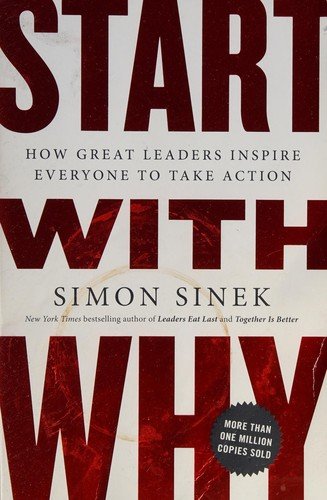
Start With Why
How Great Leaders Inspire Everyone to Take Action
People don't buy what you do; they buy why you do it. How purpose inspires loyalty.
- Published 2009
- Easy read
- Practical guidance
- 2 min analysis
As an Amazon Associate I earn from qualifying purchases.
Introduction
Simon Sinek's TED talk on 'how great leaders inspire action' became one of the most watched ever, and Start With Why, published in 2009, expands on its central idea. Sinek argues that inspiring leaders and organizations, such as Apple, Martin Luther King Jr. and the Wright brothers, communicate from the inside out.
They start with why they do what they do, then explain how, and finally what. Most organizations do the reverse.
Who should read this book?
Leaders, entrepreneurs, marketers and anyone who wants to inspire others or find greater purpose in their work.
Helps with: Find purpose and direction, Lead and grow at work, Start something of my own
The central message
People don't buy what you do; they buy why you do it. Leaders who start with a clear purpose inspire loyalty and action.
Key ideas and concepts
The Golden Circle
Three rings: why (purpose), how (process) and what (product). Inspiring communication starts at the centre.
Manipulation vs inspiration
Price cuts, promotions and fear can drive short-term action, but only a shared purpose builds lasting loyalty.
Biology of why
Sinek links the why to the parts of the brain that drive feelings and decisions, rather than rational analysis.
Clarity, discipline and consistency
Organizations need clarity of why, discipline about how and consistency in what they do.
The split
When organizations grow, they risk losing sight of their why as founders leave and focus shifts to results.
Deeper analysis
Start With Why offers a simple, memorable idea that helps leaders and teams articulate purpose. The Golden Circle is easy to explain and to apply, and many readers find it clarifies why some brands and leaders earn deep loyalty.
The book is repetitive, essentially one idea expanded to book length, and leans heavily on Apple. Its explanation of brain biology is simplified, and critics note the success stories are selected after the fact; many companies with a strong why still fail. Use it as a useful lens for communication and purpose rather than a complete theory of business success.
Practical applications
- Write your personal or team why in one sentence.
- Rewrite your elevator pitch starting with why.
- Check whether your daily actions match your stated purpose.
- Ask team members why they do their work.
- Look at a brand you love and identify its why.
Your 7-day action plan
- Day 1
Watch or read about the Golden Circle.
- Day 2
Write your personal why.
- Day 3
Draft your team or business why.
- Day 4
Rewrite a pitch or bio starting with why.
- Day 5
Check one decision against your why.
- Day 6
Discuss purpose with a colleague.
- Day 7
Refine your why statement.
Outcomes to expect
What readers who apply this book can realistically take away from it:
- A clearer sense of purpose
- More inspiring communication
- Better alignment between values and actions
- A shared language for purpose in teams
Strengths and limitations
Strengths
- Simple, memorable framework
- Helps articulate purpose
- Useful for communication and marketing
- Accessible and engaging
Limitations
- One idea stretched to book length
- Heavy reliance on Apple examples
- Simplified brain science and selective success stories
Reflection questions
- Why do you do what you do?
- Do people around you know your why?
- Where do your actions contradict your purpose?
- Which organizations inspire your loyalty, and why?
Related books
How to Win Friends and Influence People
Dale Carnegie
The classic guide to getting along with people, still useful nearly a century later.
The 7 Habits of Highly Effective People
Stephen R. Covey
Seven principles for leading yourself first, then working well with others. One of the most influential…



Part of the reading path: Become a Better Leader
About the author
Explore the book
Read reviews, see formats (print, Kindle, audiobook) and check the current price.
See it on AmazonAs an Amazon Associate I earn from qualifying purchases.
Book details (title, author, year) are factual. Everything under the headings above is MindsetProdigy's own editorial analysis and interpretation, written to help you decide whether to read the book and how to apply it. It is not a substitute for reading the book itself. Last updated September 27, 2026.