

Highly recommended
Decisive
How to Make Better Choices in Life and Work
A four-step process, WRAP, to make better decisions and avoid common traps.
- Published 2013
- Easy read
- Science and research
- 2 min analysis
As an Amazon Associate I earn from qualifying purchases.
Introduction
Chip and Dan Heath, authors of Made to Stick and Switch, turn to decision-making in Decisive, published in 2013. Drawing on psychology research, they identify four 'villains' of decision-making and offer a process to counter them.
Their framework is called WRAP.
Who should read this book?
Anyone making important decisions, from career choices to business strategy.
Helps with: Lead and grow at work, Think and decide more clearly
The central message
Use the WRAP process: Widen your options, Reality-test your assumptions, Attain distance before deciding, and Prepare to be wrong.
Key ideas and concepts
Widen your options
Narrow framing, seeing a choice as 'this or not this', is a common trap. Ask what else you could do, and imagine your current options disappeared.
Reality-test your assumptions
Counter confirmation bias by asking what would have to be true for each option, seeking disconfirming evidence and 'ooching': running small experiments.
Attain distance before deciding
Short-term emotion clouds judgement. Ask how you'll feel in 10 minutes, 10 months and 10 years, or what you'd advise a friend.
Prepare to be wrong
Overconfidence about the future is common. Plan for a range of outcomes and set 'tripwires' that prompt you to reconsider.
The four villains
Narrow framing, confirmation bias, short-term emotion and overconfidence are the main enemies of good decisions.
Deeper analysis
Decisive is clear, practical and memorable. The Heaths take decades of research on decision-making and organize it into a simple process, WRAP, that readers can actually remember and use for career moves, business strategy or personal choices. Tools like the 10/10/10 test and tripwires are especially easy to apply.
Like their other books, it relies heavily on stories, some of which simplify the research behind them, and readers familiar with behavioural economics will recognize many ideas. A process can't remove uncertainty, and some decisions are too urgent for a full WRAP. Still, it's one of the most usable guides to deciding well.
Practical applications
- List more options for a decision.
- Seek disconfirming evidence.
- Use 10/10/10.
- Set a tripwire.
- Test small.
Your 7-day action plan
- Day 1
Choose a decision you're facing.
- Day 2
Widen your options by listing at least three alternatives.
- Day 3
Reality-test by seeking evidence against your preferred option.
- Day 4
Use 10/10/10 to gain distance.
- Day 5
Set a tripwire that will prompt you to reconsider.
- Day 6
Make the decision.
- Day 7
Reflect on how the WRAP process helped.
Outcomes to expect
What readers who apply this book can realistically take away from it:
- More options before important decisions
- Less confirmation bias
- Calmer, more distanced judgement
- Plans that anticipate being wrong
Strengths and limitations
Strengths
- Clear, memorable WRAP process
- Practical tools such as 10/10/10 and tripwires
- Grounded in decision research
- Useful for personal and business choices
Limitations
- Stories sometimes simplify the research
- Familiar to readers of behavioural economics
- Not every decision allows time for the full process
Reflection questions
- Are you framing narrowly?
- What evidence contradicts you?
- How will you feel in 10 years?
- What's your tripwire?
Related books
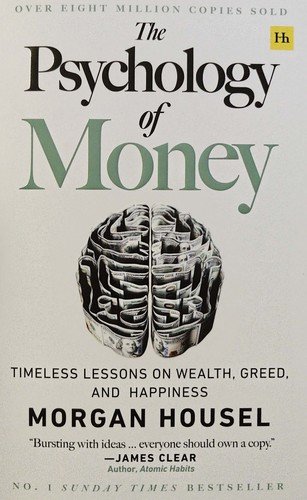
The Psychology of Money
Morgan Housel
Doing well with money has less to do with intelligence and more to do with behaviour. Short, memorable…
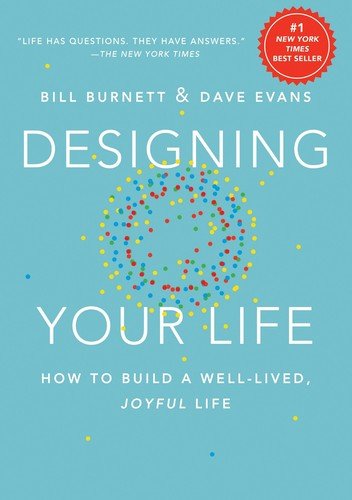
Designing Your Life
Bill Burnett and Dave Evans
Apply design thinking to your life: get curious, try things and prototype your way to a career you love.


About the authors
Explore the book
Read reviews, see formats (print, Kindle, audiobook) and check the current price.
See it on AmazonAs an Amazon Associate I earn from qualifying purchases.
Book details (title, author, year) are factual. Everything under the headings above is MindsetProdigy's own editorial analysis and interpretation, written to help you decide whether to read the book and how to apply it. It is not a substitute for reading the book itself. Last updated September 29, 2026.