
Recommended
Crossing the Chasm
Marketing and Selling Disruptive Products to Mainstream Customers
Why new products that excite early adopters often fail with mainstream buyers, and how to cross the gap.
- Published 1991
- Demanding
- Practical guidance
- 1 min analysis
As an Amazon Associate I earn from qualifying purchases.
Introduction
Geoffrey A. Moore, a consultant to technology companies, published Crossing the Chasm in 1991. It builds on the technology adoption life cycle and argues there's a 'chasm' between early adopters, who love new technology, and the pragmatic early majority.
The book has been updated several times and remains widely read in technology startups.
Who should read this book?
Founders and marketers of new products, especially in technology.
Helps with: Start something of my own
The central message
To reach mainstream customers, focus on a narrow beachhead market and deliver a complete solution for it.
Key ideas and concepts
Adoption life cycle
Innovators, early adopters, early majority, late majority and laggards.
The chasm
Early adopters and pragmatists want different things.
Beachhead
Focus on one niche segment and dominate it.
Whole product
Pragmatists need a complete solution, including support and partners.
Positioning
Define your category and competition clearly.
Deeper analysis
Crossing the Chasm offers a lasting framework for launching new products, and its beachhead strategy is practical for startups.
It's focused on business technology markets and some examples are dated. Consumer and digital products sometimes follow different patterns. Still, the core idea of focusing narrowly to win mainstream trust is broadly useful.
Practical applications
- Identify who your early adopters are.
- Choose one niche beachhead market.
- List what that market needs for a complete solution.
- Write a clear positioning statement.
- Gather references from early customers.
Your 7-day action plan
- Day 1
Map your customers on the adoption curve.
- Day 2
Choose a beachhead.
- Day 3
Define the whole product.
- Day 4
Write a positioning statement.
- Day 5
Identify partners.
- Day 6
Collect customer stories.
- Day 7
Reflect on focus.
Outcomes to expect
What readers who apply this book can realistically take away from it:
- Clear launch strategy
- Focused target market
- Complete customer solution
- Stronger positioning
Strengths and limitations
Strengths
- Lasting framework
- Practical beachhead strategy
- Widely used
- Updated editions
Limitations
- Business-technology focus
- Dated examples
- Less relevant to some consumer products
Reflection questions
- Who are your early adopters?
- What niche could you dominate?
- What do pragmatists need?
- How do you describe your category?
Related books
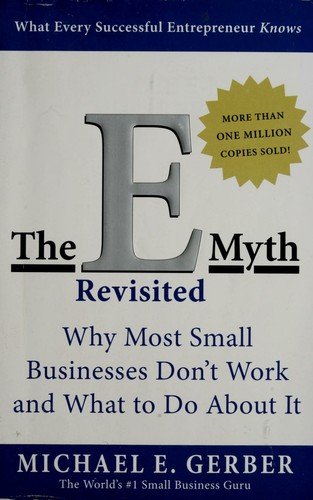
The E-Myth Revisited
Michael E. Gerber
Work on your business, not just in it. Why small businesses struggle, and how systems set you free.
About the author
Explore the book
Read reviews, see formats (print, Kindle, audiobook) and check the current price.
See it on AmazonAs an Amazon Associate I earn from qualifying purchases.
Book details (title, author, year) are factual. Everything under the headings above is MindsetProdigy's own editorial analysis and interpretation, written to help you decide whether to read the book and how to apply it. It is not a substitute for reading the book itself. Last updated September 30, 2026.