
Highly recommended
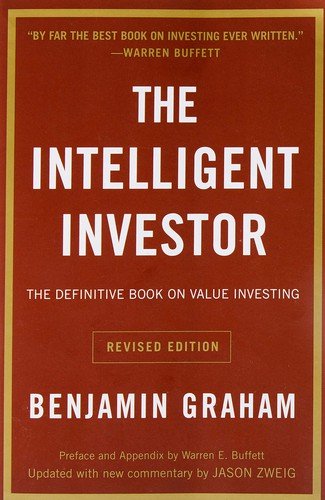
The Intelligent Investor
The Definitive Book on Value Investing
The classic on investing with discipline and a margin of safety. Demanding but foundational.
- Published 1949
- Demanding
- Science and research
- 2 min analysis
As an Amazon Associate I earn from qualifying purchases.
Introduction
Benjamin Graham was a professor at Columbia Business School and an investor, often called the father of value investing. The Intelligent Investor, first published in 1949 and revised several times, is one of the most respected investing books ever written. Warren Buffett, Graham's student, has called it the best book about investing ever written.
Modern editions include commentary by financial journalist Jason Zweig that updates Graham's examples.
Who should read this book?
Serious investors, people who want to understand value investing, and anyone willing to read a demanding classic.
Helps with: Get my money right, Think and decide more clearly
The central message
Investing should be based on careful analysis, a margin of safety and emotional discipline, not speculation or market moods.
Key ideas and concepts
Investor vs speculator
An investor analyses value and seeks safety of principal with adequate return; a speculator bets on price movements.
Mr. Market
Graham imagines the market as a moody partner offering to buy or sell daily. You can ignore his moods and take advantage of them.
Margin of safety
Buy securities for significantly less than their estimated value to protect against errors and bad luck.
Defensive vs enterprising investor
Defensive investors should keep a simple, diversified portfolio; enterprising investors can do more research.
Emotional discipline
The biggest risk is often the investor's own behaviour.
Deeper analysis
The Intelligent Investor remains foundational more than seventy years after it first appeared. Its two central ideas, the parable of Mr. Market and the margin of safety, are as relevant in today's markets as they were in Graham's: prices swing with emotion, and the investor's job is to stay rational, insist on value and protect against mistakes. Graham's distinction between defensive and enterprising investors also gives readers an honest way to decide how much effort they want to put in, and his advice for the defensive investor, a simple, diversified portfolio, remains sensible.
The book is long and technical, and many of Graham's examples, companies and tables are decades old. Jason Zweig's chapter commentaries help enormously by connecting the ideas to recent market bubbles and crashes, but readers new to investing may still find it heavy going and may prefer to start with a simpler book. Treat it as a deep foundation and general education, not personal advice.
Practical applications
- Write down whether you're a defensive or enterprising investor.
- Reflect on how you react to market swings.
- Apply the margin of safety idea to a financial decision.
- Avoid investments you don't understand.
- Read Zweig's commentary on the Mr. Market chapter.
Your 7-day action plan
- Day 1
Read the chapter on investor vs speculator.
- Day 2
Reflect on your investing behaviour.
- Day 3
Learn the Mr. Market parable.
- Day 4
Understand margin of safety.
- Day 5
Decide whether you're defensive or enterprising.
- Day 6
Review your portfolio's diversification.
- Day 7
Write your investing principles.
Outcomes to expect
What readers who apply this book can realistically take away from it:
- A clear understanding of value investing
- Emotional discipline during market swings
- Margin-of-safety thinking in financial decisions
- An honest choice between a defensive or enterprising approach
Strengths and limitations
Strengths
- Foundational, widely respected classic
- Timeless concepts such as Mr. Market and margin of safety
- Modern commentary by Jason Zweig updates the examples
- Strong emphasis on emotional discipline
Limitations
- Long and technical
- Many original examples are dated
- Challenging for complete beginners
Reflection questions
- Are you investing or speculating?
- How do you react to market moods?
- Where could you use a margin of safety?
- What kind of investor are you?
Related books
The Simple Path to Wealth
JL Collins
Investing doesn't have to be complicated. The plain-English guide to index funds and financial freedom.
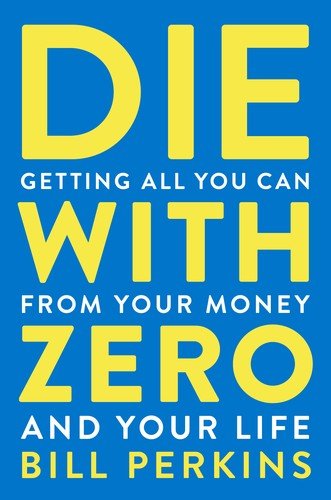
Die with Zero
Bill Perkins
Money is only valuable for the experiences it buys. Plan to use it while you can enjoy it.


About the author
Explore the book
Read reviews, see formats (print, Kindle, audiobook) and check the current price.
See it on AmazonAs an Amazon Associate I earn from qualifying purchases.
Book details (title, author, year) are factual. Everything under the headings above is MindsetProdigy's own editorial analysis and interpretation, written to help you decide whether to read the book and how to apply it. It is not a substitute for reading the book itself. Last updated September 28, 2026.