
Highly recommended
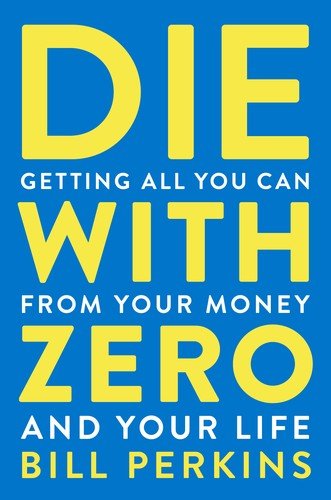
Die with Zero
Getting All You Can from Your Money and Your Life
Money is only valuable for the experiences it buys. Plan to use it while you can enjoy it.
- Published 2020
- Easy read
- Philosophy and ideas
- 2 min analysis
As an Amazon Associate I earn from qualifying purchases.
Introduction
Bill Perkins, a hedge fund manager and poker player, argues that many people save too much for too long and miss the experiences that make life rich. Die with Zero, published in 2020, proposes optimizing your life for experiences rather than maximizing wealth.
The title is a provocation: the idea is to plan to use your money while you can enjoy it, rather than dying with large unspent savings.
Who should read this book?
Diligent savers who struggle to spend, people approaching mid-life or retirement, and anyone who wants to think about money in terms of life experiences.
Helps with: Find purpose and direction, Get my money right
The central message
Money is only valuable for the experiences it enables. Plan to spend it at the right times in life, while you have the health and energy to enjoy it.
Key ideas and concepts
Memory dividends
Experiences keep paying off through the memories they create, so earlier experiences can be more valuable.
Time buckets
Divide life into periods and plan experiences for each, since some activities are only possible at certain ages.
Health is worth more than wealth
Your ability to enjoy experiences declines with age, so the value of money declines too.
Give while alive
Give money to children or causes when it can make the most difference, rather than through inheritance late in life.
Peak net worth
Identify when to stop accumulating and start spending down, while ensuring you don't run out.
Deeper analysis
Die with Zero is a valuable counterweight to the save-everything mindset. Its concepts of memory dividends and time buckets are thought-provoking, and it encourages people to think intentionally about how money serves life.
The advice suits people who already save well; for those struggling to save, it could be misread as permission to overspend. Planning to spend down requires careful estimation of lifespan and healthcare costs, which are uncertain, and Perkins discusses tools like annuities that need professional advice. Read it as a philosophy, not a precise plan.
Practical applications
- Create time buckets for experiences you want in each life stage.
- Identify one experience you've been postponing.
- Consider giving to family or causes now rather than later.
- Estimate when you might reach peak net worth.
- Discuss spending plans with a financial professional.
Your 7-day action plan
- Day 1
List experiences you want in life.
- Day 2
Sort them into time buckets.
- Day 3
Identify experiences you're postponing.
- Day 4
Reflect on memory dividends.
- Day 5
Consider giving while alive.
- Day 6
Estimate your peak net worth.
- Day 7
Plan one meaningful experience.
Outcomes to expect
What readers who apply this book can realistically take away from it:
- Intentional spending on experiences
- Better life planning
- Balanced approach to saving and spending
- More meaningful giving
Strengths and limitations
Strengths
- Valuable counterweight to oversaving
- Memorable concepts like memory dividends and time buckets
- Encourages intentional living
- Provocative and thought-provoking
Limitations
- Could be misread by people who struggle to save
- Spending down requires uncertain estimates
- Some tools need professional advice
Reflection questions
- What experiences are you postponing?
- When will you have saved enough?
- How could you give while you're alive?
- What memories do you want to create?
Related books
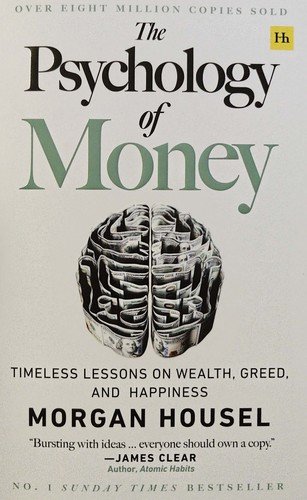
The Psychology of Money
Morgan Housel
Doing well with money has less to do with intelligence and more to do with behaviour. Short, memorable…
The Little Book of Common Sense Investing
John C. Bogle
The founder of the first index fund for ordinary investors explains why low-cost index investing works.


About the author
Explore the book
Read reviews, see formats (print, Kindle, audiobook) and check the current price.
See it on AmazonAs an Amazon Associate I earn from qualifying purchases.
Book details (title, author, year) are factual. Everything under the headings above is MindsetProdigy's own editorial analysis and interpretation, written to help you decide whether to read the book and how to apply it. It is not a substitute for reading the book itself. Last updated September 28, 2026.