
Highly recommended
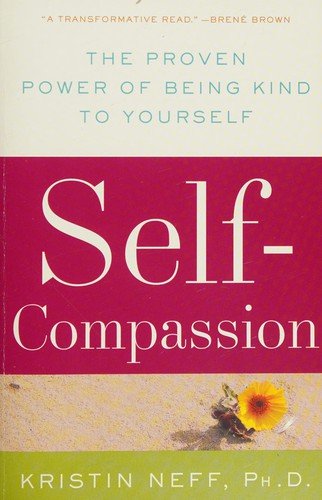
Self-Compassion
The Proven Power of Being Kind to Yourself
Treat yourself with the kindness you'd offer a friend. The research pioneer explains why it helps more than self-esteem.
- Published 2011
- Easy read
- Science and research
- 2 min analysis
As an Amazon Associate I earn from qualifying purchases.
Introduction
Kristin Neff, an associate professor of educational psychology at the University of Texas at Austin, pioneered research on self-compassion. In this book she explains what self-compassion is, why it is healthier than self-esteem, and how to practise it.
She defines self-compassion as treating yourself with the same kindness you would offer a good friend who is struggling.
Who should read this book?
People who are harshly self-critical, perfectionists, caregivers, and anyone who fears that being kind to themselves will make them lazy.
Helps with: Build confidence, Calm stress and anxiety, Heal and grow
The central message
Self-compassion, kindness, common humanity and mindfulness toward our own suffering, is a stronger foundation for wellbeing and growth than self-criticism or self-esteem.
Key ideas and concepts
Self-kindness
Being warm and understanding toward ourselves when we suffer, fail or feel inadequate, rather than criticizing ourselves.
Common humanity
Recognizing that suffering and imperfection are part of being human, so we're not alone in our struggles.
Mindfulness
Holding painful feelings in balanced awareness, neither ignoring them nor getting swept away.
Self-compassion vs self-esteem
Self-esteem can depend on feeling better than others; self-compassion is available even when we fail.
Motivation
Neff presents research suggesting self-compassion supports motivation and resilience rather than leading to laziness.
Deeper analysis
Self-Compassion is a readable introduction to a concept with substantial research support. Neff combines studies with personal stories, including raising a son with autism, which make the ideas feel warm and grounded. The practical exercises, such as the self-compassion break and writing a letter to yourself from a kind friend, are easy to try.
Some readers find the mindfulness and Buddhist-inspired elements less appealing, and the book occasionally repeats itself. Self-compassion is also easier to understand than to practise, especially for people with deep habits of self-criticism, who may benefit from therapy or courses. As an evidence-based foundation for a kinder inner life, it's highly recommended.
Practical applications
- When you make a mistake, ask what you would say to a friend.
- Use the self-compassion break: name the pain, remember others feel it too, offer yourself kindness.
- Write a compassionate letter to yourself about a current struggle.
- Notice your inner critic's tone and soften it.
- Place a hand on your heart in a stressful moment.
Your 7-day action plan
- Day 1
Notice how you speak to yourself after a mistake.
- Day 2
Practise the self-compassion break.
- Day 3
Write a letter to yourself from a kind friend.
- Day 4
Reflect on how others share your struggle.
- Day 5
Practise a short mindfulness exercise.
- Day 6
Replace one self-critical statement with a kind one.
- Day 7
Reflect on how self-compassion affected your week.
Outcomes to expect
What readers who apply this book can realistically take away from it:
- A kinder inner voice
- Greater resilience after failure
- Less anxiety and self-criticism
- Motivation based on care rather than fear
Strengths and limitations
Strengths
- Grounded in research by a pioneer in the field
- Warm and personal
- Practical exercises
- Clear distinction from self-esteem
Limitations
- Mindfulness elements won't appeal to everyone
- Some repetition
- Hard to practise for deep self-critics without extra support
Reflection questions
- How do you speak to yourself when you fail?
- Do you believe self-criticism keeps you motivated?
- When did you last offer yourself kindness?
- How would your life change with a kinder inner voice?
Related books
Mindset
Carol S. Dweck
Believing you can grow is the first step to actually growing. The landmark book on fixed versus growth…


Part of the reading path: Improve Confidence
About the author
Explore the book
Read reviews, see formats (print, Kindle, audiobook) and check the current price.
See it on AmazonAs an Amazon Associate I earn from qualifying purchases.
Book details (title, author, year) are factual. Everything under the headings above is MindsetProdigy's own editorial analysis and interpretation, written to help you decide whether to read the book and how to apply it. It is not a substitute for reading the book itself. Last updated September 27, 2026.