
Recommended
Mindsight
The New Science of Personal Transformation
A psychiatrist describes 'mindsight', the ability to see your own mind, and how it can change the brain and relationships.
- Published 2010
- Demanding
- Science and research
- 1 min analysis
As an Amazon Associate I earn from qualifying purchases.
Introduction
Daniel J. Siegel, a psychiatrist and clinical professor at UCLA, published Mindsight in 2010. He defines mindsight as the ability to perceive the mind of yourself and others.
Through case stories from his practice, he shows how developing this ability can help people heal and grow.
Who should read this book?
Readers interested in psychology, mindfulness and how the brain changes.
Helps with: Calm stress and anxiety, Heal and grow
The central message
Developing the ability to observe your mind promotes integration in the brain and relationships, leading to wellbeing.
Key ideas and concepts
Mindsight
Seeing your inner world clearly.
Integration
Linking different parts of the brain and life.
The hand model of the brain
A simple way to explain 'flipping your lid'.
Window of tolerance
The zone where you can function well.
Neuroplasticity
Attention can change the brain.
Deeper analysis
Mindsight offers useful concepts like the window of tolerance and the hand model of the brain, now widely used in therapy and education. Its case stories are engaging.
The book is long and some neuroscience claims are simplified or speculative. Readers may find it dense. It's best for those interested in the science of the mind.
Practical applications
- Learn the hand model of the brain.
- Notice when you 'flip your lid'.
- Identify your window of tolerance.
- Practise mindful awareness daily.
- Reflect on integration in your life.
Your 7-day action plan
- Day 1
Learn the hand model.
- Day 2
Notice reactions.
- Day 3
Identify your window.
- Day 4
Practise mindfulness.
- Day 5
Reflect on relationships.
- Day 6
Practise integration.
- Day 7
Reflect.
Outcomes to expect
What readers who apply this book can realistically take away from it:
- Self-awareness
- Better emotional regulation
- Understanding of the brain
- Wellbeing
Strengths and limitations
Strengths
- Useful concepts
- Engaging stories
- Influential
- Integrates science and therapy
Limitations
- Long
- Simplified neuroscience
- Dense
Reflection questions
- When do you flip your lid?
- What's your window of tolerance?
- How do you observe your mind?
- Where is integration missing?
Related books
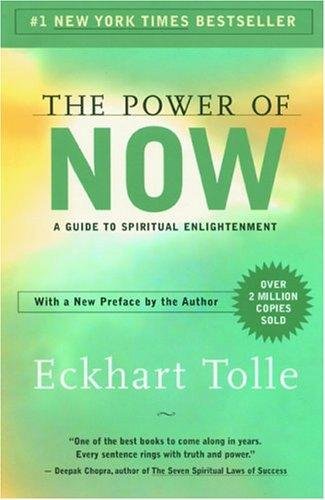
The Power of Now
Eckhart Tolle
Most of your suffering lives in the past and future. Peace is only ever here, now.
About the author
Explore the book
Read reviews, see formats (print, Kindle, audiobook) and check the current price.
See it on AmazonAs an Amazon Associate I earn from qualifying purchases.
Book details (title, author, year) are factual. Everything under the headings above is MindsetProdigy's own editorial analysis and interpretation, written to help you decide whether to read the book and how to apply it. It is not a substitute for reading the book itself. Last updated October 1, 2026.