
Highly recommended
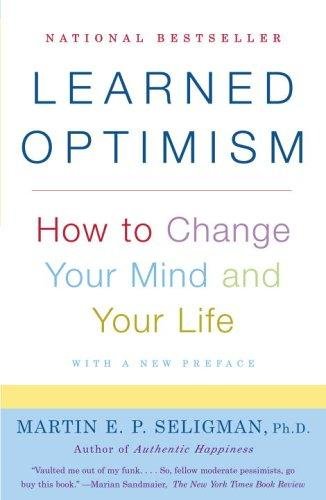
Learned Optimism
How to Change Your Mind and Your Life
Pessimism is a habit of explanation, and it can be changed. The research-based guide from a founder of positive psychology.
- Published 1990
- Moderate
- Science and research
- 2 min analysis
As an Amazon Associate I earn from qualifying purchases.
Introduction
Martin Seligman, a founder of positive psychology, began his career studying 'learned helplessness': how people and animals give up after repeated failure. In Learned Optimism he shows the reverse: optimism can be learned.
The key, he argues, is your 'explanatory style', how you explain good and bad events to yourself.
Who should read this book?
People who tend toward pessimism or self-blame, those recovering from setbacks, and parents or managers interested in resilience.
Helps with: Bounce back from setbacks, Build confidence, Calm stress and anxiety
The central message
How you explain setbacks shapes how you respond. By changing pessimistic explanations, you can become more optimistic, resilient and healthy.
Key ideas and concepts
Learned helplessness
After repeated uncontrollable failures, people may stop trying even when they could succeed.
Explanatory style
Pessimists see bad events as permanent, pervasive and personal; optimists see them as temporary, specific and external.
ABCDE method
Adversity, Belief, Consequence, Disputation, Energization: a technique for challenging negative thoughts.
Flexible optimism
Optimism isn't always right; in high-risk situations realistic pessimism has value.
Optimism and health
Seligman presents research linking optimism to resilience, achievement and wellbeing.
Deeper analysis
Learned Optimism is a foundational book that turned decades of research into practical tools. Seligman's discovery of learned helplessness, and his later work showing that optimism can be learned, helped launch positive psychology. The ABCDE method gives readers a clear, cognitive way to challenge pessimistic explanations, and his concept of flexible optimism, using realism when stakes are high, avoids naive positivity.
The book is dated in places, and some claims about optimism's effects on health and achievement are stronger than more recent research supports. The self-tests are long. Still, it remains one of the most practical introductions to changing how you think about setbacks.
Practical applications
- Notice how you explain a recent setback.
- Use the ABCDE method on one negative thought.
- Ask whether a problem is really permanent or temporary.
- Look for specific rather than global explanations.
- Practise disputing a belief as if arguing with a critic.
Your 7-day action plan
- Day 1
Write down a recent setback and your explanation.
- Day 2
Identify permanent, pervasive or personal thinking.
- Day 3
Practise ABCDE on one belief.
- Day 4
Find evidence against a pessimistic thought.
- Day 5
Notice your explanations for good events.
- Day 6
Use flexible optimism: where is realism needed?
- Day 7
Reflect on any change in your outlook.
Outcomes to expect
What readers who apply this book can realistically take away from it:
- Awareness of your explanatory style
- Tools to challenge pessimistic thoughts
- Greater resilience after setbacks
- A balanced, flexible optimism
Strengths and limitations
Strengths
- Grounded in pioneering research
- Practical ABCDE method
- Avoids naive positivity with flexible optimism
- Clear explanations
Limitations
- Dated in places
- Some claims stronger than current evidence
- Self-tests are time-consuming
Reflection questions
- How do you usually explain your failures?
- Which setbacks do you see as permanent?
- Where might realistic pessimism be useful?
- What would change if you saw setbacks as temporary?
Related books
Mindset
Carol S. Dweck
Believing you can grow is the first step to actually growing. The landmark book on fixed versus growth…
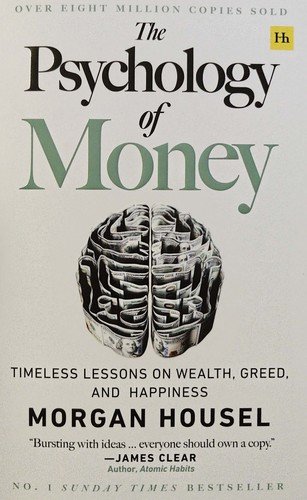
The Psychology of Money
Morgan Housel
Doing well with money has less to do with intelligence and more to do with behaviour. Short, memorable…


About the author
Explore the book
Read reviews, see formats (print, Kindle, audiobook) and check the current price.
See it on AmazonAs an Amazon Associate I earn from qualifying purchases.
Book details (title, author, year) are factual. Everything under the headings above is MindsetProdigy's own editorial analysis and interpretation, written to help you decide whether to read the book and how to apply it. It is not a substitute for reading the book itself. Last updated September 27, 2026.