
Recommended
Better Than Before
What I Learned About Making and Breaking Habits
There's no one right way to build a habit. The right strategy depends on who you are.
- Published 2015
- Easy read
- Practical guidance
- 2 min analysis
As an Amazon Associate I earn from qualifying purchases.
Introduction
Gretchen Rubin, author of The Happiness Project, noticed that habit advice often assumes everyone works the same way. In Better Than Before she argues that the best habit strategies depend on personality, and she introduces her 'Four Tendencies': how people respond to outer and inner expectations.
The book mixes her own experiments with stories from friends and readers, and offers more than 20 strategies to choose from.
Who should read this book?
People who have tried popular habit advice and found it didn't fit them, and readers who enjoy self-knowledge and personal stories.
Helps with: Build better habits
The central message
Know yourself first. When you understand your tendencies, you can choose the habit strategies that actually work for you.
Key ideas and concepts
The Four Tendencies
Upholders meet outer and inner expectations; Questioners meet them only if they make sense; Obligers meet outer but struggle with inner ones; Rebels resist both.
Accountability for Obligers
People who keep promises to others but not themselves often succeed with external accountability.
Abstainers and moderators
Some people do better avoiding a temptation completely; others do better with moderation.
Strategies of the foundation
Monitoring, scheduling and accountability support many habits.
Convenience and inconvenience
Make good habits easy and bad habits hard by changing your surroundings.
Deeper analysis
Better Than Before's main contribution is to make habit advice personal. The Four Tendencies give readers a language for why some strategies work for them and others don't, and the abstainer-moderator distinction is especially useful. Rubin's warm, curious voice makes it pleasant to read.
The Four Tendencies are Rubin's own framework rather than a validated psychological model, so treat them as a helpful lens, not science. The book relies heavily on anecdotes and can feel meandering. Still, for readers frustrated by one-size-fits-all advice, it's a useful complement to more systematic habit books.
Practical applications
- Take Rubin's Four Tendencies quiz and note your type.
- If you're an Obliger, add outside accountability to one habit.
- Decide whether you're an abstainer or moderator for one temptation.
- Make one good habit more convenient and one bad habit less convenient.
- Monitor one habit you've never tracked before.
Your 7-day action plan
- Day 1
Identify your tendency.
- Day 2
Choose a habit that keeps failing and ask why.
- Day 3
Pick a strategy suited to your tendency.
- Day 4
Change your environment to support the habit.
- Day 5
Add accountability or monitoring.
- Day 6
Decide on abstaining or moderating one temptation.
- Day 7
Reflect on what felt different.
Outcomes to expect
What readers who apply this book can realistically take away from it:
- Better self-knowledge about how you respond to expectations
- Habit strategies that fit your personality
- Less frustration with generic advice
- More consistent habits
Strengths and limitations
Strengths
- Makes habit advice personal
- Memorable Four Tendencies framework
- Warm, engaging writing
- Many strategies to choose from
Limitations
- Four Tendencies aren't a validated scientific model
- Anecdote-heavy
- Can feel meandering
Reflection questions
- Which tendency describes you best?
- Do you do better avoiding temptations or moderating them?
- Who could help hold you accountable?
- What habit strategy has never worked for you, and why?
Related books
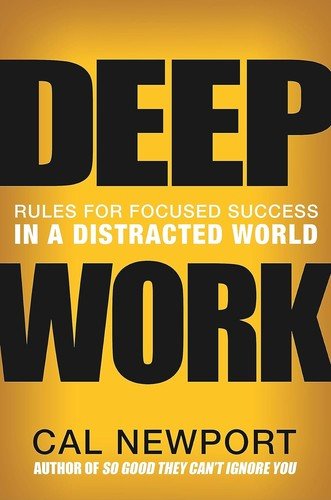
Deep Work
Cal Newport
In a world of constant pings, the ability to focus deeply on hard work is rare and valuable. Here is how to…


About the author
Explore the book
Read reviews, see formats (print, Kindle, audiobook) and check the current price.
See it on AmazonAs an Amazon Associate I earn from qualifying purchases.
Book details (title, author, year) are factual. Everything under the headings above is MindsetProdigy's own editorial analysis and interpretation, written to help you decide whether to read the book and how to apply it. It is not a substitute for reading the book itself. Last updated September 29, 2026.