

Highly recommended
The Power of Habit
Why We Do What We Do in Life and Business
Understand the cue, routine and reward behind every habit, and learn how to rewrite the ones that hold you back.
- Published 2012
- Easy read
- Stories and memoir
- 2 min analysis
As an Amazon Associate I earn from qualifying purchases.
Introduction
Charles Duhigg, an investigative journalist, set out to understand why some habits are so hard to break and why some people and organizations change so dramatically. His answer centres on the habit loop: a cue that triggers a routine, which delivers a reward.
The book moves between individual lives, companies and social movements, showing how habits shape everything from morning routines to corporate safety records. It reads more like narrative nonfiction than a manual, which makes the science memorable.
Who should read this book?
Curious readers who want to understand why habits work before trying to change their own, and people interested in how habits operate in organizations and communities as well as individuals.
Helps with: Build better habits, Think and decide more clearly
The central message
Habits run on a loop of cue, routine and reward; you rarely delete a habit, but you can keep the cue and reward and deliberately change the routine in the middle.
Key ideas and concepts
The habit loop
A cue triggers an automatic routine that leads to a reward. Over time the brain begins to crave the reward as soon as it sees the cue.
The golden rule of habit change
Identify the cue and the reward of a bad habit, then insert a new routine that delivers a similar reward.
Keystone habits
Some habits, like regular exercise or family dinners, trigger a chain of other positive changes.
Belief and community
Changes are more likely to last when people believe change is possible, often because they belong to a group that shares that belief.
Habits in organizations
Companies run on routines too, and changing one keystone habit can transform a whole culture.
Deeper analysis
The book's strength is storytelling. Duhigg makes research vivid, and the habit loop is a genuinely useful lens for noticing your own patterns. The chapter on experimenting to find the real reward behind a craving is especially practical.
Its weaknesses come from the same source. Some stories are more illustrative than scientific, and the book spends less time on step-by-step application than more recent guides. Readers wanting a ready-made system may prefer to pair it with a more practical book.
Practical applications
- Pick one habit you want to change and write down its cue: time, place, emotional state, people or preceding action.
- Experiment with rewards: when the urge hits, try a different routine and notice whether the craving fades.
- Plan your replacement routine in advance with an "if this cue, then this routine" statement.
- Look for a keystone habit, such as daily exercise, that could make other changes easier.
- Find a person or group who supports the change you're making.
Your 7-day action plan
- Day 1
Choose one habit to change and describe the routine in detail.
- Day 2
Each time the urge appears, note the time, place, mood, people and what you just did.
- Day 3
Look for the pattern in your notes to identify the cue.
- Day 4
Test a different routine to discover what reward you're really seeking.
- Day 5
Write your plan: When [cue], I will [new routine] because it gives me [reward].
- Day 6
Follow the plan and tell one person about it.
- Day 7
Review what worked and adjust the routine or reward.
Outcomes to expect
What readers who apply this book can realistically take away from it:
- The ability to spot the cues and rewards behind your own habits
- A practical method for replacing a bad routine
- An understanding of keystone habits and how one change can lead to many
Strengths and limitations
Strengths
- Engaging stories make the science easy to remember
- The habit loop is a simple, powerful tool for self-observation
- Covers organizations and society as well as individuals
Limitations
- More narrative than step-by-step guidance
- Some examples are anecdotal and selected to fit the theory
- Newer books offer more practical systems
Reflection questions
- What cue triggers the habit you most want to change?
- What reward are you really craving when you give in?
- Which single habit might act as a keystone in your life?
Related books
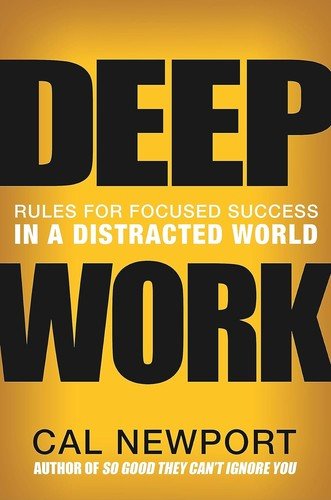
Deep Work
Cal Newport
In a world of constant pings, the ability to focus deeply on hard work is rare and valuable. Here is how to…
Meditations
Marcus Aurelius
The private journal of a Roman emperor on staying steady when life is hard.



Compare: The Power of Habit vs. Atomic Habits
Part of the reading path: Master Your Habits
About the author
Explore the book
Read reviews, see formats (print, Kindle, audiobook) and check the current price.
See it on AmazonAs an Amazon Associate I earn from qualifying purchases.
Book details (title, author, year) are factual. Everything under the headings above is MindsetProdigy's own editorial analysis and interpretation, written to help you decide whether to read the book and how to apply it. It is not a substitute for reading the book itself. Last updated September 26, 2026.