
Highly recommended
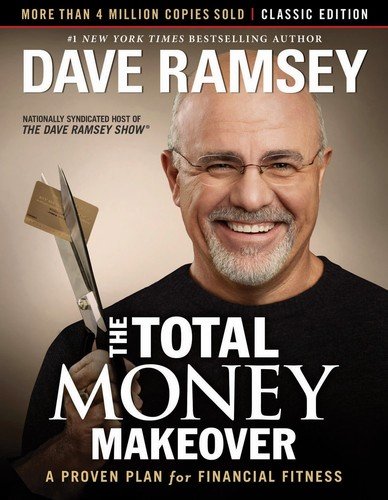
The Total Money Makeover
A Proven Plan for Financial Fitness
A step-by-step plan to get out of debt and take control of your money.
- Published 2003
- Easy read
- Practical guidance
- 2 min analysis
As an Amazon Associate I earn from qualifying purchases.
Introduction
Dave Ramsey went bankrupt in his late twenties and rebuilt his finances using strict rules. He became a radio host and author, and The Total Money Makeover, published in 2003, presents his plan in seven 'baby steps'.
Ramsey's approach is behavioural and intensely focused on getting out of debt, with a strong motivational tone and many reader stories.
Who should read this book?
People struggling with debt who want a clear, structured plan.
Helps with: Get my money right
The central message
Commit to living on a budget, eliminate debt with focused intensity and build wealth step by step.
Key ideas and concepts
The baby steps
Seven steps in order: a starter emergency fund, paying off all non-mortgage debt, a full emergency fund, investing for retirement, saving for children's college, paying off the mortgage, then building wealth and giving.
The debt snowball
Pay off debts from smallest to largest balance, regardless of interest rate. Quick wins build motivation.
Live on a budget
Give every dollar a job with a written monthly budget.
Avoid debt
Ramsey argues against credit cards and most borrowing, encouraging cash and saving up instead.
Gazelle intensity
Attack debt with focus and sacrifice to finish quickly.
Deeper analysis
The Total Money Makeover's power lies in its simplicity and motivation. For people overwhelmed by debt, the baby steps provide a clear order of priorities, and the debt snowball builds momentum through early wins. Many readers credit it with transforming their finances.
Some advice is debated. Mathematically, paying highest-interest debt first (the avalanche method) saves more money, though Ramsey argues motivation matters more. His blanket rejection of credit cards, his assumptions about investment returns and his advice on certain investment products have been criticized by other financial experts. The book is US-focused and includes religious elements. It's best for people who need structure and motivation to get out of debt.
Practical applications
- Write a monthly budget giving every dollar a job.
- List debts from smallest to largest.
- Save a starter emergency fund.
- Pay extra on your smallest debt.
- Cut one expense to speed up debt payoff.
Your 7-day action plan
- Day 1
List all debts and balances.
- Day 2
Write a monthly budget.
- Day 3
Start a starter emergency fund.
- Day 4
Cut one expense.
- Day 5
Make an extra payment on your smallest debt.
- Day 6
Talk with your partner about money goals.
- Day 7
Review progress.
Outcomes to expect
What readers who apply this book can realistically take away from it:
- A clear plan for getting out of debt
- Budgeting habits
- Momentum through quick wins
- A starter emergency fund
Strengths and limitations
Strengths
- Very clear, step-by-step plan
- Highly motivating
- Focus on behaviour change
- Many real stories
Limitations
- Debt snowball isn't mathematically optimal
- Some investment assumptions criticized
- US-focused with religious elements
Reflection questions
- How does debt affect your life?
- Do you know where your money goes?
- What would you do with no payments?
- What would you give up to be debt-free sooner?
Related books
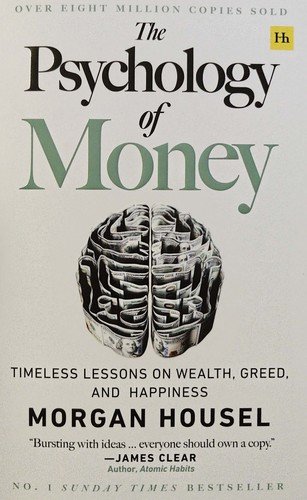
The Psychology of Money
Morgan Housel
Doing well with money has less to do with intelligence and more to do with behaviour. Short, memorable…
The Little Book of Common Sense Investing
John C. Bogle
The founder of the first index fund for ordinary investors explains why low-cost index investing works.

About the author
Explore the book
Read reviews, see formats (print, Kindle, audiobook) and check the current price.
See it on AmazonAs an Amazon Associate I earn from qualifying purchases.
Book details (title, author, year) are factual. Everything under the headings above is MindsetProdigy's own editorial analysis and interpretation, written to help you decide whether to read the book and how to apply it. It is not a substitute for reading the book itself. Last updated September 28, 2026.