
Recommended
The Power of Positive Thinking
The 1952 classic on faith, confidence and positive thinking that shaped generations of self-help.
- Published 1952
- Easy read
- Philosophy and ideas
- 1 min analysis
As an Amazon Associate I earn from qualifying purchases.
Introduction
Norman Vincent Peale was an American minister whose 1952 book The Power of Positive Thinking became one of the best-selling self-help books of the twentieth century. It combines Christian faith with practical techniques for confidence, peace of mind and success.
The book influenced countless later motivational writers and remains widely read.
Who should read this book?
Readers who enjoy faith-based encouragement and classic self-help, and anyone curious about the roots of modern motivational writing.
Helps with: Build confidence, Calm stress and anxiety
The central message
Belief in yourself and faith in God, combined with positive thinking and prayer, can help overcome worry and achieve success.
Key ideas and concepts
Believe in yourself
Peale argues that confidence based on faith is the foundation of achievement.
Peaceful mind
Practices like prayer, positive words and emptying the mind of worry create calm.
Expect the best
Positive expectations shape behaviour and results.
Don't believe in defeat
Peale encourages persistence and refusing to accept failure.
Practical techniques
Affirmations, visualization and scriptural phrases are offered as tools.
Deeper analysis
The Power of Positive Thinking is historically important and still comforting for many readers, especially those who share its Christian faith. Its encouragement to replace worry with hopeful thoughts has helped many people.
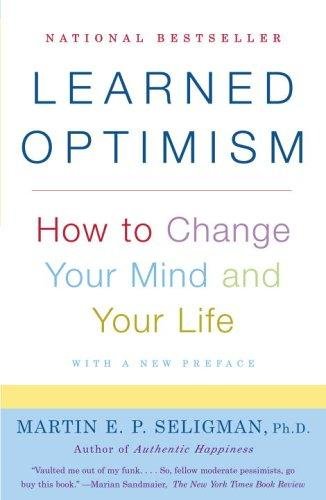
Critics, including mental health professionals, argued that it relies on anecdotes and can encourage suppressing problems rather than addressing them. Research on positive thinking is mixed, and positive fantasies alone can reduce effort. It's best read as an inspirational classic alongside evidence-based approaches like Learned Optimism.
Practical applications
- Replace one worried thought with a hopeful one.
- Start the day with a positive statement or prayer.
- Visualize handling a challenge well.
- List your strengths before a hard task.
- Take action alongside positive thinking.
Your 7-day action plan
- Day 1
Notice worried thoughts.
- Day 2
Start with a positive statement.
- Day 3
Visualize success.
- Day 4
List your strengths.
- Day 5
Practise a calming technique.
- Day 6
Take a concrete action.
- Day 7
Reflect on your outlook.
Outcomes to expect
What readers who apply this book can realistically take away from it:
- Hopeful outlook
- Calmer mind
- Confidence
- Understanding of a self-help classic
Strengths and limitations
Strengths
- Historically influential
- Comforting and hopeful
- Simple techniques
- Faith-based support for believers
Limitations
- Relies on anecdotes
- Can encourage avoiding real problems
- Mixed evidence for positive thinking alone
Reflection questions
- What worries occupy your mind?
- How do you talk to yourself?
- Where does your confidence come from?
- What action could support your positive thoughts?
Related books
Mindset
Carol S. Dweck
Believing you can grow is the first step to actually growing. The landmark book on fixed versus growth…


About the author
Explore the book
Read reviews, see formats (print, Kindle, audiobook) and check the current price.
See it on AmazonAs an Amazon Associate I earn from qualifying purchases.
Book details (title, author, year) are factual. Everything under the headings above is MindsetProdigy's own editorial analysis and interpretation, written to help you decide whether to read the book and how to apply it. It is not a substitute for reading the book itself. Last updated September 30, 2026.