
Recommended
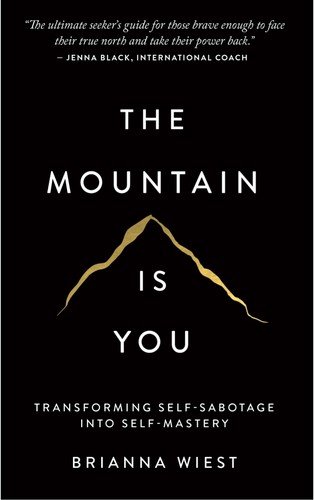
The Mountain Is You
Transforming Self-Sabotage Into Self-Mastery
The biggest obstacle in your way is often your own behaviour, and that's good news. Understanding self-sabotage.
- Published 2020
- Easy read
- Philosophy and ideas
- 2 min analysis
As an Amazon Associate I earn from qualifying purchases.
Introduction
Brianna Wiest is a writer whose essays on self-understanding have gained a large online following. The Mountain Is You focuses on self-sabotage: why we hold ourselves back, and how to change.
She argues that self-sabotage is not a flaw but an unconscious coping mechanism that meets a hidden need. Understanding that need is the key to moving forward.
Who should read this book?
People who keep getting in their own way, procrastinating, avoiding or repeating unhelpful patterns, and readers who enjoy reflective, essay-style writing.
Helps with: Bounce back from setbacks, Heal and grow
The central message
Self-sabotage is a sign of unmet needs. By understanding your triggers and building emotional intelligence, you can turn your biggest obstacle, yourself, into a path to growth.
Key ideas and concepts
Self-sabotage as protection
Behaviours that look self-defeating often protect us from discomfort, change or even the fear of success.
Triggers as guides
Strong emotional reactions point to unresolved issues and unmet needs that deserve attention.
Emotional intelligence
Learning to process emotions rather than suppressing them or acting them out helps break old patterns.
Releasing the past
Letting go of old identities and stories makes room for growth.
Becoming your future self
Make decisions as the person you want to become, rather than the person you've been.
Deeper analysis
The Mountain Is You is insightful and compassionate. Its central reframing, that self-sabotage is a coping mechanism meeting a hidden need rather than proof of a character flaw, helps readers approach their patterns with curiosity instead of shame. Many find its essays comforting and clarifying, and the emphasis on emotional intelligence and on becoming your future self gives readers direction.
The book is reflective rather than structured, so it doesn't offer a clear programme, and some chapters repeat ideas in different words. Its claims are mostly based on the author's insight rather than research, and it occasionally makes broad statements about psychology. Readers who want therapy-based methods may want to combine it with books like Self-Compassion or The Confidence Gap.
Practical applications
- Notice a pattern of self-sabotage and ask what need it meets.
- Write down your emotional triggers.
- Practise naming emotions as they arise.
- Write a letter from your future self.
- Make one decision as your future self would.
Your 7-day action plan
- Day 1
Identify a recurring self-sabotaging behaviour.
- Day 2
Ask what it protects you from.
- Day 3
Notice your triggers.
- Day 4
Practise processing an emotion.
- Day 5
Write about who you want to become.
- Day 6
Act as that person once.
- Day 7
Reflect on what you learned.
Outcomes to expect
What readers who apply this book can realistically take away from it:
- Better understanding of your self-sabotaging patterns
- Awareness of the needs behind them
- Skills for processing emotions
- A clearer vision of who you want to become
Strengths and limitations
Strengths
- Compassionate reframing of self-sabotage
- Insightful, quotable essays
- Encourages curiosity rather than shame
- Accessible and widely loved
Limitations
- Lacks a structured programme
- Some repetition between chapters
- Based on insight more than research
Reflection questions
- How do you get in your own way?
- What does that behaviour protect you from?
- What triggers strong reactions in you?
- Who do you want to become?
Related books
Man's Search for Meaning
Viktor E. Frankl
Even in the worst conditions, we can choose our attitude and find meaning. One of the most influential books…
Meditations
Marcus Aurelius
The private journal of a Roman emperor on staying steady when life is hard.



About the author
Explore the book
Read reviews, see formats (print, Kindle, audiobook) and check the current price.
See it on AmazonAs an Amazon Associate I earn from qualifying purchases.
Book details (title, author, year) are factual. Everything under the headings above is MindsetProdigy's own editorial analysis and interpretation, written to help you decide whether to read the book and how to apply it. It is not a substitute for reading the book itself. Last updated September 27, 2026.