
Recommended
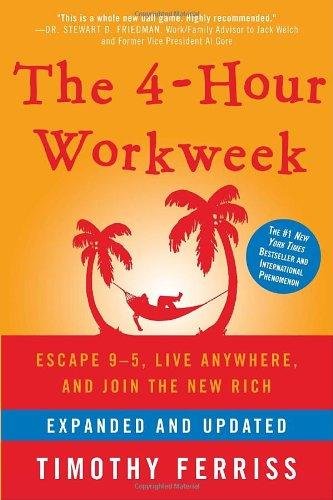
The 4-Hour Workweek
Escape 9-5, Live Anywhere, and Join the New Rich
Rethink work so it funds your life instead of consuming it. A bold, controversial guide to lifestyle design.
- Published 2007
- Moderate
- Practical guidance
- 2 min analysis
As an Amazon Associate I earn from qualifying purchases.
Introduction
Tim Ferriss's The 4-Hour Workweek, published in 2007, challenged the traditional path of working for decades and retiring late. He introduced 'lifestyle design': creating a life of more freedom now, through automation, outsourcing and mobility.
The book uses the acronym DEAL: Definition, Elimination, Automation and Liberation.
Who should read this book?
People who feel trapped in a 9-to-5 job, aspiring entrepreneurs and anyone interested in productivity and location independence.
Helps with: Find purpose and direction, Focus and get more done, Start something of my own
The central message
Question default life scripts. Define what you want, eliminate the unimportant, automate income and liberate yourself from location.
Key ideas and concepts
Definition
Define what you really want, using 'dreamlining' to estimate what your ideal lifestyle actually costs, and question assumptions about work and retirement.
Elimination
Apply the 80/20 rule to tasks and customers and adopt a 'low-information diet' to focus on what matters.
Automation
Build income streams and systems, such as outsourcing and simple product businesses, that don't require constant attention.
Liberation
Negotiate remote work or create location-independent income to gain freedom of movement.
Mini-retirements
Take extended breaks throughout life rather than deferring all enjoyment to the end of a career.
Deeper analysis
The 4-Hour Workweek inspired a generation to rethink work and retirement. Its strongest ideas, applying the 80/20 rule to tasks and customers, cutting low-value information, and questioning the idea of deferring all enjoyment to retirement, remain valuable. Ferriss's energy and willingness to experiment are infectious.
The title promises far more than most readers can achieve; very few people could realistically work four hours a week. Many tactics, such as outsourcing your life to virtual assistants or quickly building a 'muse' product business, are dated or unrealistic for most people, and some advice on negotiating or gaming rules can feel manipulative. Its focus also assumes skills and resources not everyone has. Take the mindset of lifestyle design and elimination, and treat the specific tactics with caution.
Practical applications
- Define your dreamlines: what you want and what it costs.
- Apply the 80/20 rule to your tasks.
- Try a low-information diet for a week.
- Automate one recurring task.
- Plan a mini-retirement.
Your 7-day action plan
- Day 1
Write your 'dreamlines': what you want to have, be and do, and what it costs.
- Day 2
Apply the 80/20 rule to your tasks and identify the vital few.
- Day 3
Start a low-information diet: no news or social media for a day.
- Day 4
Eliminate or delegate one low-value recurring task.
- Day 5
Automate one routine process with a tool or template.
- Day 6
Explore what remote or flexible work options exist in your job.
- Day 7
Plan a mini-retirement or extended break, even if it's years away.
Outcomes to expect
What readers who apply this book can realistically take away from it:
- Willingness to question default life scripts
- Focus on high-value activities
- Habits of elimination and automation
- A personal vision of freedom
Strengths and limitations
Strengths
- An inspiring vision of designing your life now
- Useful 80/20 and elimination thinking
- Challenges the idea of deferring life to retirement
- Energetic, experimental writing
Limitations
- Misleading title
- Many tactics are dated or unrealistic
- Some advice feels manipulative
Reflection questions
- What would you do with more freedom?
- What could you eliminate?
- What could you automate?
- Are you deferring life?
Related books
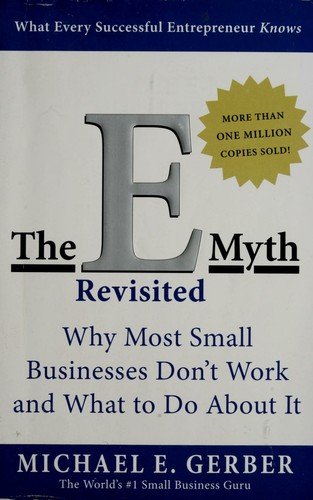
The E-Myth Revisited
Michael E. Gerber
Work on your business, not just in it. Why small businesses struggle, and how systems set you free.
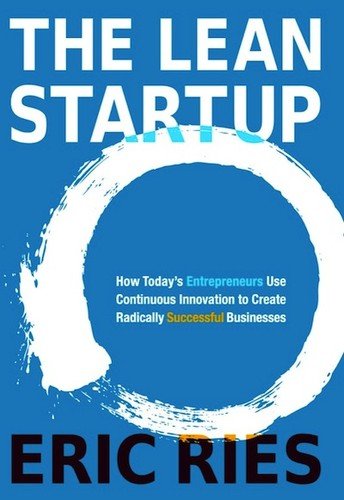
The Lean Startup
Eric Ries
Build, measure, learn. Test ideas quickly and cheaply before betting everything on them.
About the author
Explore the book
Read reviews, see formats (print, Kindle, audiobook) and check the current price.
See it on AmazonAs an Amazon Associate I earn from qualifying purchases.
Book details (title, author, year) are factual. Everything under the headings above is MindsetProdigy's own editorial analysis and interpretation, written to help you decide whether to read the book and how to apply it. It is not a substitute for reading the book itself. Last updated September 28, 2026.