
Recommended
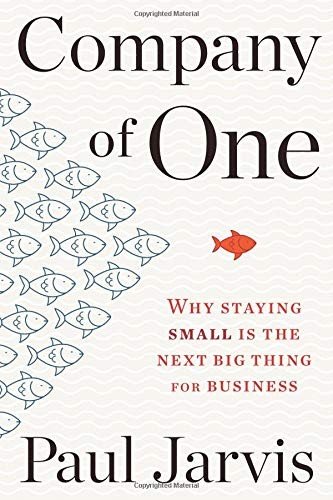
Company of One
Why Staying Small Is the Next Big Thing for Business
Growth isn't always better. Build a business that's small, resilient and designed around the life you want.
- Published 2019
- Easy read
- Practical guidance
- 2 min analysis
As an Amazon Associate I earn from qualifying purchases.
Introduction
Paul Jarvis, a designer and entrepreneur, argues that bigger isn't always better. In Company of One, he makes the case for businesses designed to stay small, profitable and sustainable, prioritizing freedom and quality of life over growth.
He shares examples of solo founders and small teams who chose to stay small.
Who should read this book?
Freelancers, solo entrepreneurs, small business owners and employees who want more autonomy.
Helps with: Find purpose and direction, Start something of my own
The central message
Question growth for its own sake. Build a business that's better, not bigger, and that supports the life you want.
Key ideas and concepts
Question growth
Growth adds complexity: more staff, more management, more risk. Jarvis asks readers to grow only when it truly improves the business.
Define 'enough'
Decide in advance what level of revenue, workload and lifestyle is enough, so you can stop chasing more.
Resilience and speed
Small businesses can adapt quickly, keep costs low and survive downturns more easily.
Customers first
Serving existing customers exceptionally well often matters more than constantly finding new ones.
Teach everything you know
Sharing knowledge openly builds trust and attracts customers who value your expertise.
Deeper analysis
Company of One is a thoughtful counterpoint to growth-at-all-costs culture. Jarvis helps readers define success on their own terms, and his questions about what 'enough' means are valuable for freelancers and small business owners who feel pressured to scale. The examples of solo founders and small teams who stayed deliberately small make the case concrete.
The book is somewhat repetitive, and it is stronger on philosophy than on practical steps for building such a business. Its approach suits knowledge-based and online businesses best; companies with high fixed costs or those competing on scale may need to grow to survive. Still, it's encouraging for anyone who wants freedom and sustainability over size.
Practical applications
- Define 'enough' for your business.
- List what growth would cost you.
- Focus on serving current customers.
- Share knowledge publicly.
- Simplify one process.
Your 7-day action plan
- Day 1
Write what 'enough' means for your income, workload and lifestyle.
- Day 2
List what growth would cost you in time, stress and freedom.
- Day 3
Do something exceptional for an existing customer or client.
- Day 4
Share one thing you know publicly to build trust.
- Day 5
Simplify or remove one process in your work.
- Day 6
Review your finances against your definition of enough.
- Day 7
Describe your ideal small business or working life in a paragraph.
Outcomes to expect
What readers who apply this book can realistically take away from it:
- A clear definition of 'enough' for your business
- A more sustainable, less stressful business
- More freedom and control
- Stronger focus on existing customers
Strengths and limitations
Strengths
- A thoughtful counterpoint to growth culture
- Encourages defining success on your own terms
- Relatable examples of small, profitable businesses
- Values-focused and calm
Limitations
- Somewhat repetitive
- More philosophy than practical detail
- Doesn't suit businesses that must scale to survive
Reflection questions
- What does enough mean to you?
- What would growth cost?
- What life do you want your business to support?
- Who are your best customers?
Related books
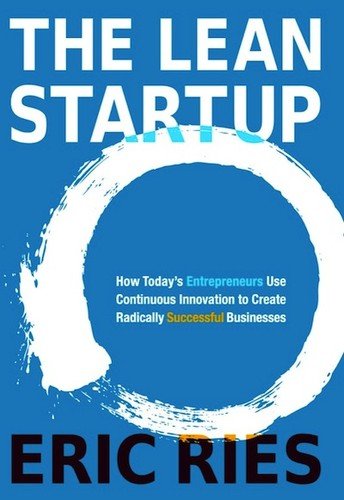
The Lean Startup
Eric Ries
Build, measure, learn. Test ideas quickly and cheaply before betting everything on them.
Shoe Dog
Phil Knight
The candid story of building Nike, from selling shoes out of a car to a global brand, with every…
About the author
Explore the book
Read reviews, see formats (print, Kindle, audiobook) and check the current price.
See it on AmazonAs an Amazon Associate I earn from qualifying purchases.
Book details (title, author, year) are factual. Everything under the headings above is MindsetProdigy's own editorial analysis and interpretation, written to help you decide whether to read the book and how to apply it. It is not a substitute for reading the book itself. Last updated September 27, 2026.