
Recommended
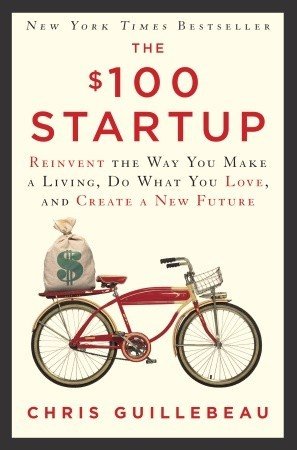
The $100 Startup
Reinvent the Way You Make a Living, Do What You Love, and Create a New Future
You don't need much money to start a business. Stories and steps from people who started with very little.
- Published 2012
- Easy read
- Stories and memoir
- 2 min analysis
As an Amazon Associate I earn from qualifying purchases.
Introduction
Chris Guillebeau, a writer who set out to visit every country in the world, studied around 1,500 people who built businesses earning at least $50,000 a year, often starting with $100 or less. The $100 Startup, published in 2012, shares their stories and the lessons Guillebeau drew from them.
He focuses on 'microbusinesses': small ventures built around skills, interests and solving problems for customers, often run by one person or a small team.
Who should read this book?
Aspiring entrepreneurs, side-hustlers and anyone who wants to start a small business without large investment.
Helps with: Get my money right, Start something of my own
The central message
You can start a profitable business with little money by combining something you enjoy or are good at with something people will pay for.
Key ideas and concepts
Convergence
A good business sits where your passion or skill meets what other people want and will pay for. Passion alone isn't enough.
Give people what they want
Customers buy benefits, often more freedom, money, love or happiness, rather than features.
The one-page business plan
Instead of long plans, answer a few simple questions on a single page: what you'll sell, who will buy it, how they'll pay and how you'll know it's working.
Launch quickly
Test ideas with real customers as early as possible, rather than spending months perfecting them.
Hustle, not hype
Promote your offering actively and honestly, telling a clear story about how it helps.
Deeper analysis
The $100 Startup is encouraging and practical. Its many real examples, from travel planners to craftspeople, show that a business doesn't need investors or a big team, and its templates, including the one-page plan and checklists, make the first steps concrete. It's especially helpful for people who want a side business or a modest, independent income.
The book suffers from survivorship bias: it profiles people who succeeded, not the many who tried similar ideas and failed. Some stories also depend on online audiences built over years, which is harder to replicate than the title suggests. The advice is light on scaling, taxes and legal basics. Still, it's motivating and actionable for aspiring small business owners.
Practical applications
- List your skills and passions.
- Identify problems people would pay to solve.
- Write a one-page business plan.
- Launch a small offer quickly.
- Ask early customers for feedback.
Your 7-day action plan
- Day 1
List your skills, passions and things people ask you for help with.
- Day 2
Find where they overlap with problems people would pay to solve.
- Day 3
Write a one-page business plan for one idea.
- Day 4
Create a simple offer with a clear price and benefit.
- Day 5
Share it with five potential customers.
- Day 6
Gather their feedback and note what they valued.
- Day 7
Decide whether to launch, adjust or try another idea.
Outcomes to expect
What readers who apply this book can realistically take away from it:
- A clear, simple business idea
- A low-cost plan to launch
- Stronger focus on customer needs
- Confidence to start small
Strengths and limitations
Strengths
- Encouraging and accessible
- Practical templates like the one-page plan
- Many real-world examples
- Shows you can start with little money
Limitations
- Survivorship bias: failures aren't studied
- Some examples depend on audiences built over years
- Light on scaling, legal and tax basics
Reflection questions
- What do you love that people would pay for?
- What problem could you solve?
- What's the smallest version you could launch?
- Who are your first customers?
Related books
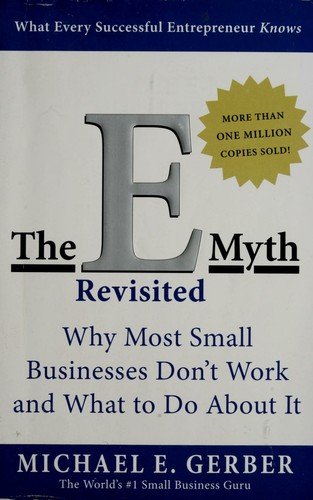
The E-Myth Revisited
Michael E. Gerber
Work on your business, not just in it. Why small businesses struggle, and how systems set you free.
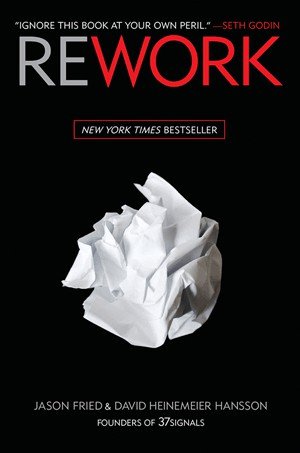
Rework
Jason Fried and David Heinemeier Hansson
Ignore conventional business wisdom. Short, punchy essays on starting and running a calm, profitable company.
About the author
Explore the book
Read reviews, see formats (print, Kindle, audiobook) and check the current price.
See it on AmazonAs an Amazon Associate I earn from qualifying purchases.
Book details (title, author, year) are factual. Everything under the headings above is MindsetProdigy's own editorial analysis and interpretation, written to help you decide whether to read the book and how to apply it. It is not a substitute for reading the book itself. Last updated September 27, 2026.