
Highly recommended
Superforecasting
The Art and Science of Prediction
Some ordinary people predict the future far better than experts. Here's how they think.
- Published 2015
- Moderate
- Science and research
- 1 min analysis
As an Amazon Associate I earn from qualifying purchases.
Introduction
Philip E. Tetlock, a psychologist at the University of Pennsylvania, and journalist Dan Gardner published Superforecasting in 2015. It's based on the Good Judgment Project, a large forecasting tournament funded by a US intelligence research agency.
Tetlock found that a small group of 'superforecasters' consistently made more accurate predictions than others.
Who should read this book?
Anyone who makes predictions or judgments, from investors to managers to curious thinkers.
Helps with: Think and decide more clearly
The central message
Good forecasting is a skill: break problems down, think in probabilities, update often and stay humble.
Key ideas and concepts
Superforecasters
Ordinary people with exceptional judgment.
Fermi-ize
Break big questions into smaller parts.
Outside view first
Start with base rates.
Update incrementally
Adjust beliefs as evidence arrives.
Foxes vs hedgehogs
Flexible thinkers outperform those with one big idea.
Deeper analysis
Superforecasting is rigorous, readable and practical, based on serious research. Its lessons improve thinking in many areas.
It focuses on short- and medium-term questions, and forecasting rare events remains hard. Some sections are detailed. It's one of the best books on judgment.
Practical applications
- Make a forecast with a probability.
- Start with the base rate.
- Break a big question into parts.
- Update a belief with new evidence.
- Track your predictions.
Your 7-day action plan
- Day 1
Learn the research.
- Day 2
Make a forecast.
- Day 3
Use the outside view.
- Day 4
Break a question down.
- Day 5
Update a belief.
- Day 6
Review predictions.
- Day 7
Reflect.
Outcomes to expect
What readers who apply this book can realistically take away from it:
- Better judgment
- Probabilistic thinking
- Humility
- Learning from feedback
Strengths and limitations
Strengths
- Research-based
- Practical
- Readable
- Improves thinking
Limitations
- Short-term focus
- Rare events hard
- Detailed
Reflection questions
- How confident are you, in numbers?
- What's the base rate?
- When did you last update a belief?
- Are you a fox or a hedgehog?
Related books
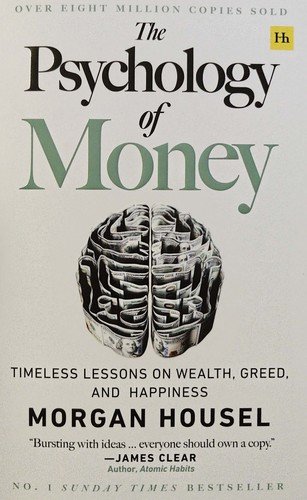
The Psychology of Money
Morgan Housel
Doing well with money has less to do with intelligence and more to do with behaviour. Short, memorable…


About the authors
Explore the book
Read reviews, see formats (print, Kindle, audiobook) and check the current price.
See it on AmazonAs an Amazon Associate I earn from qualifying purchases.
Book details (title, author, year) are factual. Everything under the headings above is MindsetProdigy's own editorial analysis and interpretation, written to help you decide whether to read the book and how to apply it. It is not a substitute for reading the book itself. Last updated October 2, 2026.