
Recommended
Mini Habits
Smaller Habits, Bigger Results
Make your daily goal so small it feels silly, like one push-up, and watch consistency take care of the rest.
- Published 2013
- Easy read
- Practical guidance
- 2 min analysis
As an Amazon Associate I earn from qualifying purchases.
Introduction
Stephen Guise started his own transformation with a single push-up when he couldn't motivate himself to exercise. Mini Habits, self-published in 2013, grew from that experiment into a simple system: commit to 'stupid small' daily actions that require almost no willpower.
The book became a word-of-mouth success, especially with readers who find big goals overwhelming.
Who should read this book?
People who set ambitious goals and then give up, procrastinators, and anyone with low motivation or a busy life.
Helps with: Beat procrastination, Build better habits
The central message
Make habits so small that you can't fail. Small daily wins build consistency and often lead to doing more.
Key ideas and concepts
Stupid small goals
Commit to actions like one push-up, writing 50 words or reading two pages. They're small enough to do on your worst day.
Willpower over motivation
Motivation is unreliable. Tiny habits need so little willpower that you can rely on them.
Bonus reps
Once you start, you often do more, but the extra is a bonus, never a requirement.
Track daily
Checking off each day builds momentum and makes the habit visible.
Several mini habits at once
Because each is tiny, you can work on a few at the same time.
Deeper analysis
Mini Habits removes the biggest barrier to starting: the size of the goal. Its central trick, setting a target so small you can't fail and treating anything more as a bonus, is genuinely effective for many people, and it aligns with the approach BJ Fogg later developed in Tiny Habits.
The book is short, self-published and repetitive, and its explanations of brain science are simplified. Some readers find mini habits stay mini, never growing into meaningful practice, which requires deliberately expanding them over time. For people who keep failing at big resolutions, though, it's a valuable reset.
Practical applications
- Pick one area and set a 'stupid small' daily target.
- Do it every day, even when you feel like more.
- Count anything extra as a bonus, not the new minimum.
- Track each day on a calendar or app.
- After a month, decide whether to raise the target slightly.
Your 7-day action plan
- Day 1
Choose a habit and shrink it to under two minutes.
- Day 2
Do it and mark it done.
- Day 3
Notice whether you naturally did more.
- Day 4
Add a second mini habit in another area.
- Day 5
Do both, even on a busy day.
- Day 6
Reflect on how little willpower it took.
- Day 7
Plan to continue for 30 days.
Outcomes to expect
What readers who apply this book can realistically take away from it:
- A habit you actually keep
- Less reliance on motivation
- Momentum from daily wins
- Confidence that you can stay consistent
Strengths and limitations
Strengths
- Removes the barrier of starting
- Simple and easy to apply immediately
- Works on low-motivation days
- Short and readable
Limitations
- Repetitive and self-published in style
- Simplified brain science
- Habits may stay small unless deliberately expanded
Reflection questions
- What goal have you abandoned because it felt too big?
- What's the smallest version of it you could do daily?
- How do you usually react when motivation disappears?
- Which mini habit would make the biggest difference over a year?
Related books
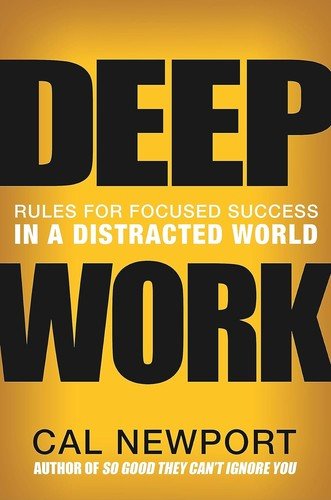
Deep Work
Cal Newport
In a world of constant pings, the ability to focus deeply on hard work is rare and valuable. Here is how to…


About the author
Explore the book
Read reviews, see formats (print, Kindle, audiobook) and check the current price.
See it on AmazonAs an Amazon Associate I earn from qualifying purchases.
Book details (title, author, year) are factual. Everything under the headings above is MindsetProdigy's own editorial analysis and interpretation, written to help you decide whether to read the book and how to apply it. It is not a substitute for reading the book itself. Last updated September 29, 2026.