
Recommended
Stolen Focus
Why You Can't Pay Attention, and How to Think Deeply Again
Your attention isn't failing because you're weak. A journalist investigates the forces stealing our focus.
- Published 2022
- Moderate
- Stories and memoir
- 2 min analysis
As an Amazon Associate I earn from qualifying purchases.
Introduction
Johann Hari, author of Lost Connections, set out to understand why he and many others struggle to focus. In Stolen Focus, published in 2022, he interviews researchers and argues that our attention problems have causes beyond individual willpower: technology design, stress, poor sleep, diet and more.
He describes twelve factors and calls for collective as well as personal change.
Who should read this book?
Anyone who feels their attention has worsened, parents worried about technology, and readers interested in social causes of personal struggles.
Helps with: Calm stress and anxiety, Focus and get more done
The central message
Our collective attention crisis has many causes, including technology designed to capture attention, so solutions need to be personal and societal.
Key ideas and concepts
Twelve causes
Hari lists factors such as speed and switching, lack of flow, sleep loss, reduced reading, technology design, stress, diet and pollution.
Switching costs
Constantly moving between tasks reduces performance.
Flow
Sustained focus on meaningful tasks is rewarding but increasingly rare.
Surveillance capitalism
Hari argues that business models built on engagement exploit attention.
Collective solutions
He calls for changes in technology regulation and work culture, not just personal tips.
Deeper analysis
Stolen Focus is engaging and thought-provoking, broadening the conversation about distraction beyond personal willpower. Hari's interviews are lively and the book offers a hopeful sense that change is possible.
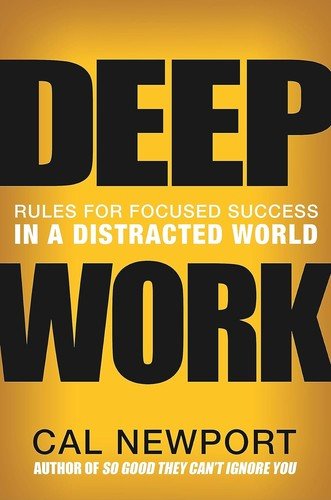
Critics argue some research is simplified or presented too confidently, and certain causes, like diet and pollution, are more speculative. As with his previous book, readers should be aware of past controversy over his journalism. It's best as a wide-angle look at attention, combined with practical tools from books like Deep Work.
Practical applications
- Put your phone in another room during focused work.
- Do one task at a time for an hour.
- Read a book for 30 minutes without screens.
- Protect your sleep.
- Talk with others about technology norms at work or home.
Your 7-day action plan
- Day 1
Track how often you switch tasks.
- Day 2
Block a single-task hour.
- Day 3
Read for 30 minutes without your phone.
- Day 4
Turn off non-essential notifications.
- Day 5
Get to bed earlier.
- Day 6
Discuss tech norms with family or colleagues.
- Day 7
Reflect on your attention.
Outcomes to expect
What readers who apply this book can realistically take away from it:
- Understanding of attention's many causes
- Less self-blame
- Practical steps for focus
- Awareness of collective solutions
Strengths and limitations
Strengths
- Engaging interviews
- Broadens the conversation beyond willpower
- Hopeful
- Thought-provoking
Limitations
- Some research simplified
- Some causes speculative
- Author's past controversies
Reflection questions
- What steals your attention most?
- When did you last focus deeply for an hour?
- How does technology design affect you?
- What could change at home or work?
Related books
Atomic Habits
James Clear
Small changes, repeated daily, add up to a life that looks completely different. A clear, practical system…


About the author
Explore the book
Read reviews, see formats (print, Kindle, audiobook) and check the current price.
See it on AmazonAs an Amazon Associate I earn from qualifying purchases.
Book details (title, author, year) are factual. Everything under the headings above is MindsetProdigy's own editorial analysis and interpretation, written to help you decide whether to read the book and how to apply it. It is not a substitute for reading the book itself. Last updated September 30, 2026.