
Recommended
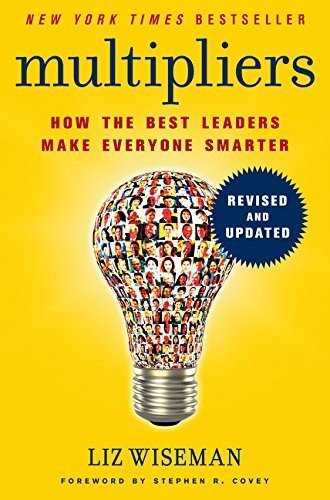
Multipliers
How the Best Leaders Make Everyone Smarter
Some leaders drain intelligence from their teams; others multiply it. How to become a multiplier.
- Published 2010
- Moderate
- Science and research
- 2 min analysis
As an Amazon Associate I earn from qualifying purchases.
Introduction
Liz Wiseman, a former executive at Oracle, studied leaders and noticed that some made everyone around them smarter and more capable, while others drained intelligence and energy. She calls the first group 'Multipliers' and the second 'Diminishers'.
Multipliers, written with Greg McKeown, describes the five disciplines that distinguish them and how leaders can become Multipliers.
Who should read this book?
Managers, executives, teachers and anyone who leads others and wants to get the best from them.
Helps with: Lead and grow at work
The central message
The best leaders amplify the intelligence and capability of their people. By acting as Multipliers, leaders get more from their teams.
Key ideas and concepts
The Talent Magnet
Multipliers attract talented people and use them at their highest point of contribution, while Diminishers hoard resources.
The Liberator
Multipliers create intense but safe environments that require people's best thinking.
The Challenger
They define opportunities that stretch people rather than giving all the answers.
The Debate Maker
They drive sound decisions by encouraging rigorous debate.
The Investor
They give people ownership of results and hold them accountable.
The Accidental Diminisher
Well-meaning leaders can shrink others by being too quick, too helpful or too full of ideas.
Deeper analysis
Multipliers offers a practical lens for leaders to examine their impact on others. Wiseman's five disciplines are clear, and her concept of the 'accidental diminisher' is especially useful because it shows how good intentions, like jumping in with ideas or rescuing people, can suppress others' thinking.
The research is based on interviews and consulting work, and claims such as Multipliers getting twice the capability from people are hard to verify independently. The book is somewhat repetitive. Still, it's a helpful tool for self-assessment and for developing leaders.
Practical applications
- Ask more questions and give fewer answers in meetings.
- Give someone ownership of a project.
- Set a stretch challenge for your team.
- Notice when you're being an accidental diminisher.
- Invite debate before decisions.
Your 7-day action plan
- Day 1
Reflect on Multiplier and Diminisher behaviours.
- Day 2
Ask questions rather than give answers.
- Day 3
Give someone ownership.
- Day 4
Set a stretch challenge.
- Day 5
Facilitate a debate.
- Day 6
Notice accidental diminisher habits.
- Day 7
Reflect on your impact.
Outcomes to expect
What readers who apply this book can realistically take away from it:
- Awareness of how you affect others' thinking
- Teams that take more ownership
- Better decisions through debate
- Stronger engagement
Strengths and limitations
Strengths
- Practical lens on leadership impact
- Valuable 'accidental diminisher' insight
- Clear set of behaviours
- Engaging stories from many organizations
Limitations
- Research claims hard to verify
- Somewhat repetitive
- Corporate focus
Reflection questions
- Do people get smarter around you?
- When do you diminish others?
- How could you give more ownership?
- What stretch challenge could you set?
Related books
How to Win Friends and Influence People
Dale Carnegie
The classic guide to getting along with people, still useful nearly a century later.
The 7 Habits of Highly Effective People
Stephen R. Covey
Seven principles for leading yourself first, then working well with others. One of the most influential…



About the author
Explore the book
Read reviews, see formats (print, Kindle, audiobook) and check the current price.
See it on AmazonAs an Amazon Associate I earn from qualifying purchases.
Book details (title, author, year) are factual. Everything under the headings above is MindsetProdigy's own editorial analysis and interpretation, written to help you decide whether to read the book and how to apply it. It is not a substitute for reading the book itself. Last updated September 27, 2026.