
Highly recommended
How Emotions Are Made
The Secret Life of the Brain
A neuroscientist argues that emotions aren't hardwired reactions but are constructed by the brain.
- Published 2017
- Demanding
- Science and research
- 1 min analysis
As an Amazon Associate I earn from qualifying purchases.
Introduction
Lisa Feldman Barrett, a psychologist and neuroscientist at Northeastern University, published How Emotions Are Made in 2017. She presents her 'theory of constructed emotion', which challenges the classical view that emotions are universal, built-in reactions.
She argues that the brain constructs emotions from bodily sensations, past experience and concepts.
Who should read this book?
Curious readers who want a scientific, challenging view of emotions.
Helps with: Calm stress and anxiety, Think and decide more clearly
The central message
Emotions are constructed by the brain using predictions and concepts. Learning more emotion concepts can give you more control.
Key ideas and concepts
Constructed emotion
Emotions are built in the moment, not triggered by circuits.
The predicting brain
The brain constantly predicts what will happen.
Interoception
Sensations from the body feed into emotions.
Emotional granularity
Having more words for feelings helps manage them.
Culture
Concepts of emotion differ across cultures.
Deeper analysis
How Emotions Are Made is a fascinating, challenging book that changes how many readers think about feelings. Its practical idea, increasing emotional granularity, is useful.
The theory is debated among scientists, and the book is dense. Readers wanting quick self-help may find it heavy. For curious readers, it's eye-opening.
Practical applications
- Learn new words for feelings.
- Notice bodily sensations before naming an emotion.
- Recategorize anxiety as excitement where appropriate.
- Look after sleep and body budget.
- Reflect on cultural views of emotion.
Your 7-day action plan
- Day 1
Read about the classical view.
- Day 2
Learn constructed emotion.
- Day 3
Notice body sensations.
- Day 4
Expand your emotion words.
- Day 5
Practise recategorizing.
- Day 6
Care for your body budget.
- Day 7
Reflect.
Outcomes to expect
What readers who apply this book can realistically take away from it:
- New understanding of emotion
- Greater emotional granularity
- More control
- Curiosity
Strengths and limitations
Strengths
- Fascinating
- Challenges assumptions
- Useful practical ideas
- Scientific
Limitations
- Dense
- Theory debated
- Less practical
Reflection questions
- How many emotion words do you use?
- What does your body feel?
- Could you reframe a feeling?
- How does culture shape emotion?
Related books
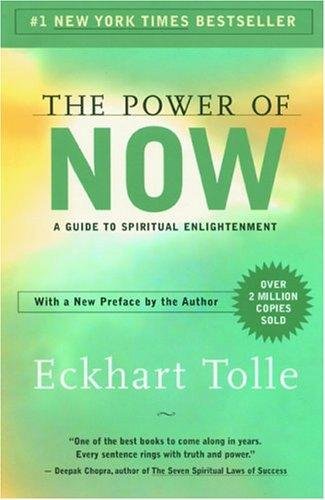
The Power of Now
Eckhart Tolle
Most of your suffering lives in the past and future. Peace is only ever here, now.

About the author
Explore the book
Read reviews, see formats (print, Kindle, audiobook) and check the current price.
See it on AmazonAs an Amazon Associate I earn from qualifying purchases.
Book details (title, author, year) are factual. Everything under the headings above is MindsetProdigy's own editorial analysis and interpretation, written to help you decide whether to read the book and how to apply it. It is not a substitute for reading the book itself. Last updated October 1, 2026.