
Highly recommended
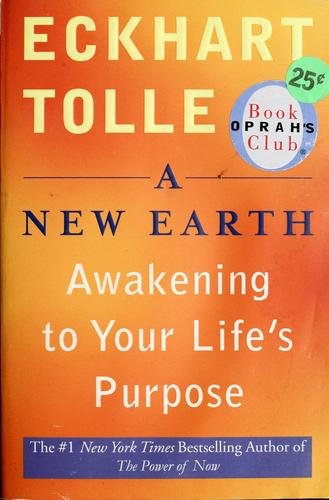
A New Earth
Awakening to Your Life's Purpose
See how the ego drives conflict and dissatisfaction, and find a calmer way to live and work.
- Published 2005
- Moderate
- Philosophy and ideas
- 2 min analysis
As an Amazon Associate I earn from qualifying purchases.
Introduction
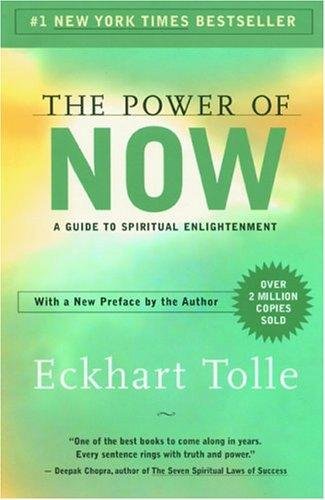
In this follow-up to The Power of Now, Eckhart Tolle examines the ego: the part of us that needs to be right, to have more and to be seen in a certain way. He shows how it fuels anxiety, conflict and dissatisfaction.
He argues that recognizing ego is the beginning of freedom, and explores purpose as the way we bring presence to what we do.
Who should read this book?
Readers drawn to spirituality who want less conflict and more peace.
Helps with: Find purpose and direction, Improve my relationships
The central message
Recognizing the ego's patterns frees us from much conflict, and our primary purpose is to bring awareness to whatever we do.
Key ideas and concepts
The ego
Tolle describes the ego as identification with thoughts, possessions, roles and stories about ourselves, which creates a constant sense of lack.
The pain-body
Old emotional pain can be reactivated and fuel conflict and negativity in relationships.
Roles and identity
We often play roles, such as parent, expert or victim, and confuse them with who we are.
Awakening
Becoming aware of the ego weakens its hold and allows a deeper sense of being to emerge.
Inner purpose and outer purpose
Your inner purpose is to be present; your outer purpose is what you do in the world, which flows best from presence.
Deeper analysis
A New Earth extends The Power of Now by focusing on the ego and its role in individual and collective suffering. Many readers find its analysis of roles, identification and reactive conflict illuminating, especially in relationships, and it reached a huge audience after being featured by Oprah Winfrey.
It shares the earlier book's weaknesses: abstract, repetitive and spiritual in tone, with sweeping claims about human consciousness that aren't backed by evidence. Its vision of a collective awakening may feel idealistic. Readers who connected with The Power of Now will likely find it valuable; others may struggle.
Practical applications
- Notice when you need to be right.
- Observe a complaint before voicing it.
- Bring full attention to a routine task.
- Reflect on roles you identify with.
Your 7-day action plan
- Day 1
Notice ego in a conversation.
- Day 2
Let someone else be right.
- Day 3
Do a chore with full attention.
- Day 4
Notice an old reaction in a relationship.
- Day 5
Reflect on your roles.
- Day 6
Consider your inner purpose.
- Day 7
Reflect.
Outcomes to expect
What readers who apply this book can realistically take away from it:
- Awareness of ego-driven thoughts and roles
- Less reactivity in relationships
- A sense of inner purpose
- Greater presence
Strengths and limitations
Strengths
- Insightful analysis of ego and identity
- Helpful for understanding reactive conflict
- Expands on The Power of Now
- Widely read and discussed
Limitations
- Abstract and repetitive
- Sweeping claims without evidence
- Idealistic vision of collective change
Reflection questions
- When do you need to be right?
- What roles do you cling to?
- What is your inner purpose?
Related books
Man's Search for Meaning
Viktor E. Frankl
Even in the worst conditions, we can choose our attitude and find meaning. One of the most influential books…
Meditations
Marcus Aurelius
The private journal of a Roman emperor on staying steady when life is hard.


About the author
Explore the book
Read reviews, see formats (print, Kindle, audiobook) and check the current price.
See it on AmazonAs an Amazon Associate I earn from qualifying purchases.
Book details (title, author, year) are factual. Everything under the headings above is MindsetProdigy's own editorial analysis and interpretation, written to help you decide whether to read the book and how to apply it. It is not a substitute for reading the book itself. Last updated September 28, 2026.