
Highly recommended
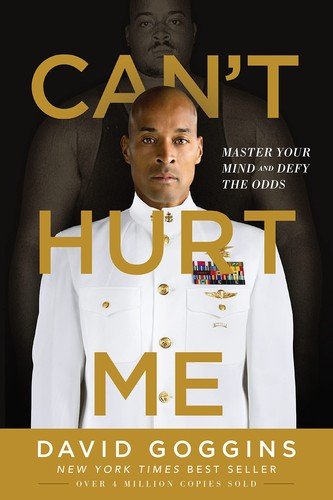
Can't Hurt Me
Master Your Mind and Defy the Odds
You've only tapped a fraction of what you're capable of. A raw memoir with challenges for the reader.
- Published 2018
- Easy read
- Stories and memoir
- 2 min analysis
As an Amazon Associate I earn from qualifying purchases.
Introduction
David Goggins grew up facing poverty, abuse and racism, struggled with obesity and low self-esteem, and transformed himself into a Navy SEAL, ultra-endurance athlete and record-breaker. Can't Hurt Me, published in 2018, tells his story and offers challenges to readers.
His core message is that most people use only a fraction of their potential.
Who should read this book?
Readers wanting tough, motivating inspiration and willing to accept a demanding, intense approach.
Helps with: Bounce back from setbacks, Stay motivated
The central message
Push past your perceived limits through mental toughness, accountability and embracing discomfort.
Key ideas and concepts
The 40% rule
Goggins argues that when your mind says you're done, you've only used about 40% of your capacity. It's a motivational idea rather than a measured fact.
The accountability mirror
Write your goals, insecurities and truths on sticky notes and face them in the mirror every day.
Callousing your mind
Doing hard, uncomfortable things repeatedly toughens you mentally, just as calluses toughen hands.
The cookie jar
Remember past victories and hardships you overcame, and draw on them when you want to quit.
Taking souls
Exceeding others' expectations, especially when they doubt you, can give you a mental edge.
Deeper analysis
Can't Hurt Me is gripping and intensely motivating. Goggins's story, from poverty, abuse and racism to becoming a Navy SEAL and ultra-endurance athlete, is extraordinary, and his tools, like the accountability mirror and the cookie jar, are concrete and memorable. Many readers credit the book with pushing them to finally take control of their lives.
His extreme approach, including running on broken legs and pushing through serious injury, can be harmful if copied, and the book says little about rest, recovery or seeking help for mental health. The tone is raw and profane. Use it for motivation and accountability tools, not as a blueprint for how hard to push your body.
Practical applications
- Create an accountability mirror.
- Fill a cookie jar of past wins.
- Do one uncomfortable thing daily.
- Push slightly beyond perceived limits.
- Rest when needed.
Your 7-day action plan
- Day 1
Write honest truths about your goals and insecurities on sticky notes on your mirror.
- Day 2
List past victories and hardships for your 'cookie jar'.
- Day 3
Do one uncomfortable thing you'd normally avoid.
- Day 4
Push slightly past where you'd usually stop in a workout or task.
- Day 5
Take full accountability for one area of your life.
- Day 6
Rest and recover properly, which is part of getting stronger.
- Day 7
Reflect on where you stop at 40% and what you'll change.
Outcomes to expect
What readers who apply this book can realistically take away from it:
- Greater mental toughness
- Honest accountability for your goals
- Confidence drawn from past victories
- Motivation to push past comfort
Strengths and limitations
Strengths
- Gripping, extraordinary life story
- Highly motivating
- Concrete tools like the accountability mirror
- Brutally honest
Limitations
- Extreme approach can be harmful if copied
- Little attention to rest or mental health support
- Raw, profane tone won't suit everyone
Reflection questions
- What truths do you avoid?
- What's in your cookie jar?
- Where do you stop at 40%?
- What discomfort could grow you?
Related books
The War of Art
Steven Pressfield
Name the force that keeps you from your real work, then beat it by showing up every day.
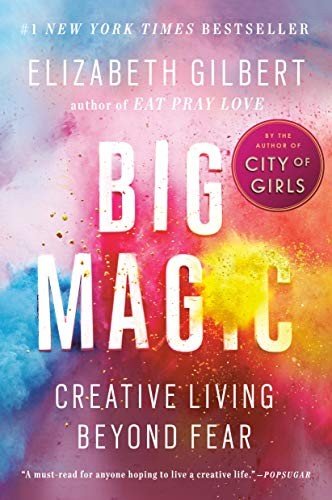
Big Magic
Elizabeth Gilbert
Live creatively alongside fear. Warm encouragement from the author of Eat Pray Love.


Part of the reading path: Build Unbreakable Discipline
About the author
Explore the book
Read reviews, see formats (print, Kindle, audiobook) and check the current price.
See it on AmazonAs an Amazon Associate I earn from qualifying purchases.
Book details (title, author, year) are factual. Everything under the headings above is MindsetProdigy's own editorial analysis and interpretation, written to help you decide whether to read the book and how to apply it. It is not a substitute for reading the book itself. Last updated September 29, 2026.